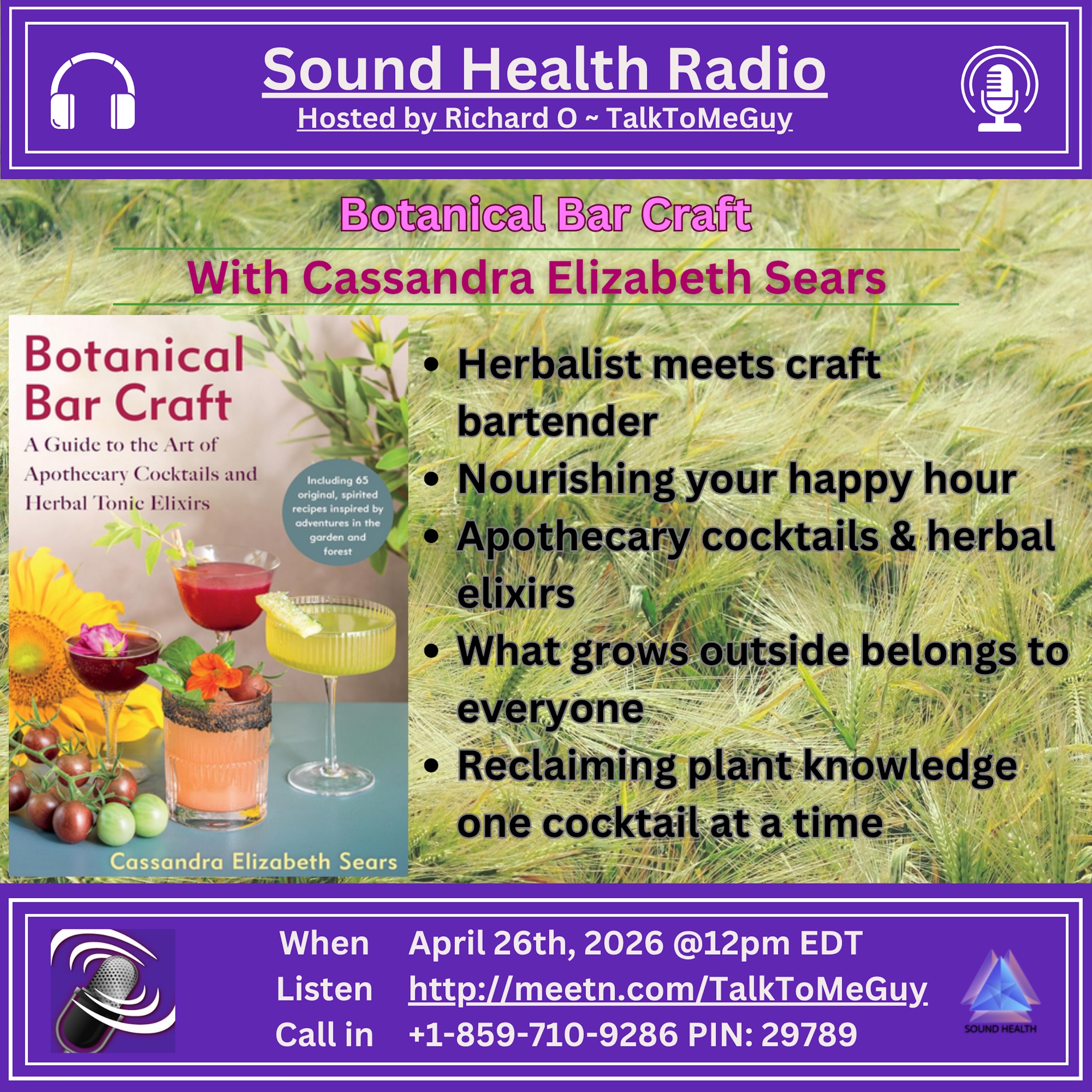
Botanical Bar Craft with Cassandra Elizabeth Sears

 PocketCasts
 Apple Podcasts
 Goodpods
 Audible
 Overcast
 Castro
 RSS Feed
 Cassandra Elizabeth Sears is the real thing.
An apothecary bartender... gardener... forager... and clinical herbalist...
who has spent sixteen years learning what plants know...
and what they can do. She grew up in Maine and Maine never really left her. You can feel the woods and the salt air in everything she makes. By day or by season you might find her behind the bar at the legendary White Barn Inn in Kennebunkport. Or out in her gardens growing the very ingredients she'll later pour into a glass or working alongside local small farmers who share her reverence for the land.
She is the proprietor of The Remedy Cocktail Co, where botanical cocktail classes, private events and genuine craft all live under one roof.
A graduate of the clinical herbalist training program at the Vermont Center of Integrative Herbalism.
She also maintains a private wellness consultation practice, because for Cassandra the bar and the apothecary were always the same room.
And now she's written the book on it, Botanical Bar Craft.
Welcome Cassandra...
Links from the show
•Please sign up for the email list for future notifications•
If you would like help starting your own show or podcast, as well as help selecting a microphone and setup for your voice; Please tap the microphone and leave me a message with your contact information and I will get back to you.
Or you can email talktomeguy@gmail.com
More information at: SoundHealthOptions.com
Music
TalkToMeGuy : Greetings everyone, this is the Sound Health Radio Show where we talk about the crossroads of the environment, our health and longevity, with Richard Talktomy guy and Sherry Edwards' off working on the Sound Health Portal. I would suggest going to the SoundHealthPortal.com, scrolling down just a bit and clicking on the Watch How button. You'll see a short video explaining how to record and submit your first recording. Then go back to SoundHealthPortal.com, scroll down to current active campaigns such as cellular inflammation, bio diet, neuroplasticity, or memory, and choose one that is of interest for you. Click on that campaign and click Free Voice Analysis and the system will walk you through submitting your recording.
You receive an email with your report back usually in one to two hours. To hear and share replays of this show, 50 to 60 minutes after you hear the outro music, go to TalktomyGuy.com, scroll down that page and you'll see this show at the top of the episodes page. There are also hundreds of shows available there as well. There is a microphone icon at the bottom right corner of all the show notes.
If you'd like to leave me a voice message with a question for a guest or a guest idea for a show, you can do that directly from the site and I will be notified.
TalkToMeGuy: With that, Cassandra Elizabeth Sears is the real thing. An impothequary bartender, gardener, forager, and a clinical herbalist who has spent 16 years learning what plants know and what they can do. She grew up in Maine and Maine never really left her. You can feel the woods and the salt air in everything she makes by day or by season. You might find her behind the bar at the legendary white barn Inn in Kenna Buckport or in her gardens growing the very ingredients she'll later pour into a glass or working alongside local farmers who share her reverence for the land. She's the proprietor of the Remedy Cocktail Company, where botanical cocktail classes, private events, and genuine craft all live under one roof. I graduated the clinical herbalist training program at the Vermont Center of Integrative Herbalism. She also maintains a private wellness consultation practice because for Cassandra, the bar and the apothecary were always the same room. And now she's written the book on it, Botanical Barcraft. Welcome Cassandra.
Cassandra Sears: Thank you, Richard.
TalkToMeGuy: I laugh at the they're all the same. The room is the same. When I had an herb store, it was the same way. When I'd be out having a meal or something, people would come over and ask me questions. And it was always the same whether it was in the herb store or it was anywhere eating or anything. It's everywhere. Once they know you as an herbalist, it's always available. People just show up at your table. Hi. Can I ask you a question? Sure...
Cassandra Sears: Definitely. I think beautiful introduction, by the way. Thank you very much. I actually, I love and prefer casual conversations about herbs. I love it when I have a coworker asking me when I'm working on a shift about some random plant or I have a friend texting me a picture of a plant from their yard. I think the casual conversations are sometimes the most rewarding. Yes. Yeah.
TalkToMeGuy : And sometimes you learn more in the casual conversation than you do if you're working with a person as a consultation. In the casual part, rather than the like, I'm going to ask you a series of questions because that immediately locks everybody up. Yes, absolutely. And it's a lot more fun. I agree.
Cassandra Sears: That's one of the reasons I've been bartending for more than 10 years now is because it is so much fun.
TalkToMeGuy : Well, it's such a classic, every time I think about this, it makes me sort of laugh. Bartending is such a schmoozy conversational thing to begin with. It is. You are chatting with people while you're making cocktails or a billion cocktails, but you still have the capacity to chat with people, at least in my mind, good bartenders. And that's part of the cadence and the skill of being a bartender is being able to a multi-task and maybe, maybe multi-multi-task, but you get it all done. And at the same time, you still are, to a certain extent, entertaining people while they're sitting at the bar. Definitely.
Cassandra Sears: A big part of the role is holding space and being a host. So you can't forget, like to me, that's the number one, is the fact that you're hosting space for other people. And then, and it can be hard, especially if, like for right now, I work at a small bar and in the summertime, I'm doing service bar for two restaurants at once. So if my bars are full and I'm doing the service part where I'm basically essentially just moving as fast as humanly possible, cocktails. It's definitely, I always joke around and say that people in the summertime, people are in the splash zone, but it's always the best kind of people that like to be in that environment and like to watch you and, you know, are entertained by it. They're usually, they're usually some of the more fun people. I like, I like bar people.
TalkToMeGuy : No, I understand. I was a working chef for 20 years. So it was always, because you're, like you say, you're in the zone, you're working fast, but that doesn't mean you have to stop talking. Sometimes you do, but not very often because if you're good at your work, you can still talk and do the work at the same time, which always shocks people that like, you're doing this thing and I'm talking to you and it kind of scares me, but you're still just talking to me.
Cassandra Sears: Yeah, it's a kind of almost like a high speed meditation in a way.
TalkToMeGuy : It's a working meditation. It is.
Cassandra Sears: And I feel like your, like, speed's not for everybody, but like I feel like for me, like I'm so comfortable with the movements by now. That it, like when I was, when I probably 10 years ago, when I started, I wouldn't have been able to hold space and like produce quickly at the same time. But I think once like, once the movements are automatic, you know, it's like riding a bike or like even like breathing, like the movements are automatic. You know, your body is doing, can easily be doing something else. Yeah. Your brain.
TalkToMeGuy : Yeah, exactly. I mean, it is, you're always formulating your brain, even if you're making a cocktail you've made a hundred times, it's always a certain amount of, well, a little more of this perhaps today or, you know, something like that. Yeah. But you're still, you know, it's, it's an automation of sorts while still being creative. That's the part that I always liked. You're still being a creative.
Cassandra Sears: Yes. Obviously, the big part of, I mean, it's fun to me when someone comes to the bar and will ask, you know, I mean, depending on how busy it is, but when someone will just like say to make them whatever I want, I actually really like some people don't like that, but I like that because you can be making the same menu items for months at a time. And it's a lot more, it's more fun to kind of be creative on the spot. Yeah. Yeah.
TalkToMeGuy : That's why you have all that knowledge in your head. So you can be creative on the spot. Yeah.
Cassandra Sears: And it's more, more, more playful.
TalkToMeGuy : Yeah. I have a, I want to actually read a couple of short reviews from Botanical Barcraft. Okay. And this one we'll have further conversation about. Growing herbs is an act of resistance and resilience, a vibrant affirmation of our roots, both in the ground in our hearts. That was by Clarenda Farmer C. Stanley at Green Hefe Farms. And another great one, Cassandra Sirius is one of those herbalists who can confidently say, plants chose me. Jane Howley, Stevens, four elements organic herbals. Was there, was there an aha or a tipping point moment when you realized you'd been chosen?
Cassandra Sears: I, it's funny you chose that quote to read out because that one actually kind of made me tear up a little bit when I, when I sent it because I don't, I don't actually know either of those people prior to Chelsea Green reaching out and asking if they'd read and, and write a testimonial if they liked my book. But so when I read that particular review, I definitely teared up because I have, I would, I would say that I've always been a plant person. I, as a, as a child, I spent tons of time in nature.
I pretty much, I saw, I saw it out. I spent a lot of time in the woods by myself and just, and I didn't know what anything, I didn't have anyone around me that knew, like, what anything was. Like, so I didn't, I didn't learn that, like ecology or, like, herbal medicine was actually a study until I was, I started learning ecology when I was, I went to an alternative high school. And I really loved ecology. And then I learned that herbal medicine was something you study when I was about 18. And as soon as I learned that there was this whole world, I immediately dove in. But as far as just feeling more, I've always felt more comfortable in, in natural environments than, than human environments.
TalkToMeGuy : I understand completely. That's all I really understand. So you've blended, I know that it's sort of, I'll say in vogue, to be doing, not, not, well, people might call it botanical, but to be doing common combining herbs into cocktails. It is, I think it's big enough now that I can call it trending.
Cassandra Sears: Yeah, I think people are really, are really into, into botanical cocktails and also functional beverages. I mean, if you look at that, just that market for like some of the, even like, in Hanifert, you can get like, Oli pop, which are like the functional sodas, like probiotic sodas. But yeah, people are crazy about functional beverages. And eyes, I never, so I definitely started, started out with the combining of the two in this very natural way.
And it was before, I would say before it was super trendy. But it, but I found the combination unintentionally, because I went to Vermont to do a three year clinical herbal training program. After having self studied herbs and worked on farms for a few years, I wanted to like dive in deeper. And the way that I could pay to go to that program and live in Vermont was by working in hospitality. And I don't really, I like, I liked, I was drawn to bartending because of the independence of it.
I don't, I didn't, I actually am not a very good waitress, but I like having my, having my own space. So I, I basically, I put myself through that program bartending. And so I was learning like really in depth phytochemistry. At the same time, I was learning mixology. And, and then it just kind of stuck like stuff that was probably that was back in, that was 10 years ago.
And yeah. So I didn't, it ended up, it was casual at first. I was really into making cocktails. And I would just do it for my friends and incorporate the herbs. And it was kind of a hobby for a couple years. And then I started teaching some, some classes about it. And then eventually it evolved into the cocktail catering business that you mentioned, the remedy, which I actually am, I'm not booking for the remedy at the moment, but I, I ran that cocktail catering business for three years. And even before I started the business and built out a commercial kitchen, I got a liquor license in the state of Maine. Even before I did all of that, I was just sort of casually booking and doing bartending events for my friends that were hosting herbal retreats. So there's this one retreat in Maine that I, I think I did for six years in a row. And that was 100% non-alcoholic, non-alcoholic herbal tonics.
TalkToMeGuy : And how do you make the extracts that go into those tonics? What are you using?
Cassandra Sears: I'm just trying to give you, so for, for the, for herbal, like functional beverages and herbal tonics, sometimes I will use a tincture because if you're using, there are many that, that I make that have no alcohol and there's many ways to have no alcohol. But people have different definitions of a mocktail. To me, if something only has like one mil of an alcoholic tincture, that's like not going to make you feel the alcohol at all. But some people have, have reasons, you know, either addiction or spiritual reasons for not consuming any alcohol. I tend, when I make them for myself, I tend to do tinctures depending on what the herb is, because herbs extract differently in different menstruates. And so there are some constituents that will extract well in water based, some will extract best in glycerin and many will extract best in alcohol. But like I said, it's, if you're only using one to three mils in like a, you know, 10, 12 ounce mocktail, it's not, it's essentially non-alcoholic. It's lower than perceptible.
TalkToMeGuy : I went through a phase of making a lot of vinegar based, I love vinegars to begin with, vinegar based extractions just because I like the flavors so much. Yes, I love it. Vinegar is a caring agent.
Cassandra Sears: Absolutely. Thanks for, yeah, so that's, that's a really good point. I love making oxy-males. Have you made an oxy-male? I have not. So an oxy-male is basically like a shrub, but you use honey instead of sugar. Oh, wow. And they're very yummy.
So a lot of times right now actually is a great time in Maine to be making oxy-males with the vinegar extractions because we have a lot of very mineral rich plants and vinegar is really good for extracting minerals.
TalkToMeGuy : I'm not stuck. I'm just in my brain. I'm not wondering about that for a moment going, wow, that's a great thing to know. I haven't thought about it that way.
Cassandra Sears: Yeah, and then also vinegar is sour. So it has a tendency to engage the liver. So if you're someone that doesn't do alcohol, having that, having a substance, the sour flavor, engage the liver can kind of help for like a drink craving if you're not doing alcohol as well. Yeah.
TalkToMeGuy : And can we have an esoteric moment between us and talk about and ask you a question about vinegar as well? Bitter's. Bitter's is my question, really is ultimately my question. I've always been fond of bitters of all kinds. I used to drink for years.
I drank Zans bitter formula or made my own bitter formulas just because I like the action of what bitters do for the body. I grew up in an good for my liver. And I'm not opposed to drinking. I have no issues with drinking, evidently, as people have said of me. You have no issues with drinking.
That's correct. I do not. And I have a high tolerance. But I've just always loved the flavor of bitters, the more gnarly, the more European, the more Germanic, I'll say. They are, they're just so extraordinary. They're one of my very favorite things is bitters. But the idea of this oxymel is a very interesting idea as a flavoring agent. I can't make that into a question. I'm sorry.
Cassandra Sears: No, that's okay. So if you if you oxy, mel's are great because similarly to bitters, if you make an oxymel, you can mix like one ounce of an oxymel and have like the recipe club soda. And it's like the the easiest mocktail or tonic that you can make because you already did all the hard work of letting it macerate for four to six weeks and straining it.
And then you just have this thing that's ready to go. And you can do that plus some some club soda and have a very satisfying mocktail. And the same goes for bitters, I would say when I'm not drinking. And because I have a tendency, I'll go like pretty long periods without indulging in alcohol. And when I'm when I'm not and if I go out bitters and soda is my go to for for a non alcoholic drink, and it's something you can order almost anywhere. And bitters are wonderful because as you know, like you said, they're great for your liver, they help, they help stimulate your blood sugar. So the or they help regulate your blood sugar. And then they stimulate your pancreatic enzymes as well as your liver bile to help you digest your food. A lot of people, you can use bitters for weight loss even because it like makes your digestion more efficient. And with the blood sugar regulating piece, but also bitters, energetically are very grounding, which I like if I'm like out and like overstimulated at a party or something.
TalkToMeGuy : Well, I often compensate with double X versus. I go for the full I'm rarely buzzed. I'm just I've always been a grounded person. I think it was part of my chef life. I'm you know, always calm and you know, when your hair is on fire. But I like but I like great coffee. I mean, I really like great coffee. So I get a lot of that bitter quality, even though I know it's not the same as a traditional bitters.
But I know it does have a bitter action because it is bitter. It is. So I'm fond of both of that. But the idea of the oxymel is delicious on a summer day. Definitely.
Speaker 1: Very nice. And as I was going through the book, which is really I cannot recommend the book highly enough, because a the pictures are great. Did you take the photographs?
Cassandra Sears: I took a few of them, but I actually had worked with several several photographers throughout the course of making my recipes. Probably the most photos were from a friend of mine, Jim Beko's. But I worked with quite a few photographers. And some of that was when I was doing catering events. Sometimes I would have when I was when I was working on having marketing material for my business, I would have a photographer come and take photos of me in action at events. And so I had I had had some buildup of photos as well. But thank you, I agree. I'm very happy with with the aesthetic quality of the book. Yes.
TalkToMeGuy : Yeah, it's really nice to see. You know, just to have a picture of what that finished product could look like. Because they're all and some of the names. Some of the names, you know, like Kavaka cow flip. Now that's a mouthful to say to begin with.
But it's just like some of the names that some of my favorites were Kavaka cow flip. Pregnancy punch. That's a great one.
Euphoria euphoria and bloody botanist. Did these just come to you as you were making them? I mean, did you have to work names or did it just sort of you're in the process of making a Kavaka cow flip? And one day that name just comes to you because that's what's in it, I'm guessing.
Cassandra Sears: Yeah, usually I make make the cocktail before it has the name. But oftentimes the name is a result of whatever the focus of the drink is. I tend to like to look to mythology and like story as much as possible if I can. But then also like, for instance, like I have in the summer cocktails, I have like babe in the woods. Like that's like a popular or that's not popular, but it's an old idiom. So I used idioms sometimes as well. So basically, the name usually comes to me after I taste the drink. Oh, that's interesting.
That's a different show. Sometimes they're more more literal. Like, obviously the pregnancy punch is very literal.
I made that recipe for a friend of mine, Baby Shower, and she was very pregnant and it was full of tonics that are safe for pregnancy. So that was like a very literal literal name. Yeah. And then others are more, you know, mystical or silly.
TalkToMeGuy : And I have to know what's in the bloody botanist. I love the name so much. I would wear that as a baseball cap any day. That would be just great to spook people.
Cassandra Sears: Yeah, so that's that's that's my my take on a bloody Mary and I walk through how to make like a canned bloody Mary mix.
TalkToMeGuy : Nice. Spicy, I hope.
Cassandra Sears: Yeah, I like them spicy.
TalkToMeGuy : I like a little shot of what I had to do it easily. I add just a splash of horseradish root juice.
Cassandra Sears: Oh, yeah, that's a good idea. Yeah, I have some horseradish in the garden. Like, you're reminding me I need to to dig some up.
TalkToMeGuy : Is it actually a place near me that makes a bloody Mary with that in it after I jostled the bartender long enough and a piece of smoked bacon? Which is first when you first see it, you're like, what is that? What? And then you taste it and the flavors are so good together. The spice, the acid of the tomato, it's a well balanced cocktail with a piece of smoked bacon in it, which just adds that slight essence of smoke to the drink. It's really quite delicious.
Cassandra Sears: Yeah, I like I like I like a smoky drink. I'm a big fan of of mezcal. I actually I actually have on the white bar menu right now I made. I was in kind of the territory of a bloody Mary, but I did like to atomatio. Wow. High ball with with mezcal and it's very tasty. I want that now.
TalkToMeGuy : That'd be great.
Cassandra Sears: Yeah, I like the savory, savory cocktails. Yeah.
TalkToMeGuy : And now that this is going to be more of a herbal conversation. I hear the word tonic. I think when people, let me put it this way, I think when people hear the word tonic, the first thing that comes to their mind is something like tonic water. People don't really understand the idea of tonic. And you have a much older and deeper definition, I think, I feel. Would you talk about that?
Cassandra Sears: Yes, absolutely. So when I say tonic and refer to tonic, I'm talking about toning the body much much like you would go to the gym and work out. I think of you can take food, medicinal food and supplements on a daily basis that have this slow tonic effect on the body or strengthening effect by the practice of doing them over time.
TalkToMeGuy : So we still keep things like, well, the classics are like Jin Sing and Don Kwae, long term beneficial effect. That's their history. They've always been known for, take them forever and you'll live long and prosper.
I don't know about the prosper part, but you'll live long, that's for sure. Into that family, I would also add something like osha, which I don't think is really thought of as a tonic. It's a Western American Indian herb. It's a sticky chew on kind of like licorice root. It's much more bitter.
Cassandra Sears: Definitely think of it as like a potent expectorant.
TalkToMeGuy : Yes, that could be true. All the years that I was in the herb store, I always had a piece of osha root in my mouth. Some Indian came in, friend of mine, and said, no, no, just put it in your mouth. It doesn't have to be complicated. You don't have to do the thing where you make a tincture. Just put stick in your mouth, buddy. And I did and I grew very fond of having that flavor in my mouth. Yes, at first it was a little assertive, but I'd done other flavors that were that assertive. And the entire time I was in the herb store, I never ever got sick.
Cassandra Sears: Yeah, I would believe that. It has a lot of potent like antimicrobial qualities as well. I also think it's important to note that people, individuals have affinity for different herbs based on their own constitution.
And that sounds like that functioned as a wonderful tonic for you. And the thing that I get a little freaked out about with kind of the mainstream herbalism is that people take in blanket statements too much and think that they should, they just hear a random herb and it kind of becomes like the it herb and they think that they should be taking it. And people don't understand like the nuance of like not every herb is for everyone.
TalkToMeGuy : Well, and I would express that in my usual sardonic way that, you know, like poor sad milk thistle in the sense that when it became all the rage, I'm still fond of milk thistle.
I'm not saying there's anything wrong with it. It's a great herb, wonderful for the liver. But I remember when it rose to fame and I never know why herbs, why an herb suddenly is like everybody's coming in to ask about milk thistle.
It's like, why? It's a great herb, but why are you suddenly focused on, you know, it could be an article in Reader's Digest for all we know. But that's one of those herbs where as you said, suddenly rose to fame. And there are others down through the years of hanging, even though I haven't been in the herbal world for quite some time, people still ask me because they know I used to do that and I love herbs. I'm quite jealous of your lifestyle where you actually go out and get to grow the herbs you're going to process. That side is the part I never got to do. But I love that idea. But I saw a lot of people and yeah, both alcoholic and non-alcoholic.
Cassandra Sears: Yes, I have equal parts. So I have half of the recipes are non-alcoholic and half of them are cocktails. And was that because you, go ahead. And then they're organized seasonally and within each season, the first batch of recipes are non-alcoholic and the second batch are cocktails.
TalkToMeGuy : And was there was there intention there or you just wanted to be fair to everybody?
Cassandra Sears: That's a good question. So I think to truly call, like I would never claim that a cocktail has health benefits, even if it does. That makes any sense. Like I, even if you're putting, I mean, it's a wonderful, any way that you get botanicals and phytochemistry in the body, I think is a wonderful thing. And if that's through a drink, if that's through food, of course you're getting those antioxidants. But obviously having more than one alcoholic beverage has been proven to be deleterious to your health. And I just, I'm not, I'm not one to promote that like, that cocktails are healthy. And so I think in order to, but I love, I love cocktails.
I think they're really fun. But I also really love functional beverages. And I wanted to include all of the, all of the pieces about herbal. I wanted it to be an herbal. So in the back of the book, there's 44 monographs of different plants that can be used in drinks and all their medicinal qualities, like very detailed monographs. And then in the beginning of the book, there's a few sections that go into great depth about herbal actions and different types of tonics. And so to me, the non alcoholic drinks are the true tonics. And so it was important for me.
If anything, I honestly, and I like, I like to always include everyone in the conversation. But I would say if I ever wrote another book, I would probably write a book on just functional beverages. Because if anything, I think this book, sometimes if people don't drink it all, like, they, they just see it and they don't necessarily want to pick it up because it's about cocktails.
Yeah. So if I ever wrote another book, it would be 100% about functional beverages and how to make them from scratch. Because I think that as much as I think that you're like everyday cocktail drinker will love this book and be able to find ideas and recipes for their like non drinking friends. I think I do think that the the alcohol aspects can sometimes, unless it's someone I know, and they know that but if they're just looking at the cover, I guess, they're only looking at the cover, then they're going to be like cocktails like that books not for me.
TalkToMeGuy : I think it would be brilliant for an herbalist, and I'm pointing at someone, to write a functional herbalist to write a functional non alcohol book. And because I know there are people because I know people that are in recovery. Yeah. And having been in the restructuring business, I know quite a grip of people are in recovery. And if they saw this, they totally like wouldn't want it on their coffee table. Yeah.
Cassandra Sears: And I understand that. And I understand that.
TalkToMeGuy : I'm not that dramatic. I'm not in recovery, but I'm also not that dramatic because I know there's great information in here. Just get past that and look at the monographs. I mean, there's wonderful information on there. Hoffman theory, for God's sake.
I'm not to love about Hoffman theory. So I think the idea of a book that didn't involve alcohol, but it was about functional usage of herbs. And since everybody is so excited about beverages these days, particularly with the onslaught of the various hemp, I leaned to hemp as a beverage because I like it as a medicinal.
Well, I don't like to use the word medicinal. I like it as a advocate for health because I think hemp has a lot of benefits, anti inflammatory, nutritive, great source of green vitality, all sorts of wonderful benefits and the benefits of CBD. So I'm a big fan of hemp. I'm not opposed to cannabis, but I just think it's cannabis is being beaten senseless by the industry.
So the idea of a book talking about functional side of herbs on a daily usage has nothing to do with alcohol other than perhaps there's a caring agent and extractive. It would be great. When you write that, I'll do a show with you. Happily. Thank you. Thanks.
Cassandra Sears: Yeah, there's a lot of information in this book about how to make how to make like non-alcoholic drinks from scratch. But yeah, I think having having it more focused in that for that audience, I guess. And but it's interesting because people are I'm really interested in the functional drinks and buying functional beverages. It seems to be just like an ever-expanding market, but I feel like there's so much more room for people learning how to do simple things at home that don't involve just buying like one bottle. There are some great products on the market. But then there's also a lot of other ones that are just filled with preservatives and stuff like that.
But it's fun to know a little more about the ingredient breakdown rather than buying a ready-made functional beverage that has maybe 20 different active herbs in it that you've never had before. That's the other advantage. If you're doing it at home, you can kind of... I always recommend that people try one new thing at a time because you never know if you're going to have some odd allergy. But it's good to introduce one new thing at a time to the body.
TalkToMeGuy : Yeah. Give it a chance to see how it reacts. Some people don't have any reaction to go to cola. Some people I know, I've actually had a few customers who suddenly found they were allergic to it. It's like, what is that? I've never known anything but it's allergic to go to cola. Why? I don't know.
Cassandra Sears: And then if you were having something that had 20 ingredients and it'd be pretty hard to figure out which thing you were allergic to.
TalkToMeGuy : Well, then that's a whole... This is a whole other show. You get large brands making cognitive functional beverages. And it's in a can. It has to have a shelf life.
That means it's probably some kind of preservative. It's not going to be shipped. It's not going to be refrigerated its entire life, blah, blah, blah, blah, blah, blah. So that means there's probably preservatives and other chemicals in there.
Yeah. And I don't understand how people rationalize that. I didn't mean to... This is a tiny little rant. I just don't understand how I see people paying $15 for a cocktail in a can.
Not necessarily alcohol, but a functional brain boost. And I don't mean you him be and not you him be. Well, you him be too. But Guarana or one of those really serious stimulants, I'm going to go to the gym and pump fire, which I think is a stupid way to make that happen because you're going to have adrenal fatigue in the long haul. But just the idea of if it's in a can, it gets tricky. That's at least my thinking. If it's in a can, I'm suspicious to begin with. So I'd much rather work with an herbalist or start making my own tinctures again. I already still make some tinctures. And he was some bigger vinegar extractions that I use in cooking because I like their flavor. Yeah.
Cassandra Sears: That's great. Well, it's definitely, I think doing medicine making, drink making, cooking, you know, being in the kitchen, being in the garden and being in the kitchen are very, you know, empowering things, I think, for people and very life giving.
And I feel like people don't spend enough time in the kitchen or the garden and the kitchen. you know, you can do the same age and I think it, you know, it shows.
TalkToMeGuy : That's a different show that we can do a whole show on that sometime. I'd be happy to do a show on that. I've spent a lot of time in the kitchen. That is actually one of my favorite things to do is go to a friend's house. And cook dinner with them, which means they mostly watch. And participate and chat and the whole time because I was, you know, working chef for 20 years and I like to cook. I mean, I still enjoy cooking and it isn't necessarily fancier, swankier or anything.
It's just like I'm fast because I've had a knife in my hand for half my life chopping or mincing or slicing something. And it's fun. I think it's a great entertainment arena to be in an open kitchen and talking with people while you're cooking and while they're bringing you possibly a mocktail or possibly not a mocktail. It's just a great experience. We miss that. I mean, we used to sit around fires and cook animals and talk.
Cassandra Sears: Well, that's the thing. It's very sensory, sensory friendly. Like I feel like we live in a world that's not always sensory. That's not always friendly to our senses. And I feel like the realm, like in the kitchen, it's a place where it's like one of the most human, you know, and like tactile sensory places.
TalkToMeGuy : Well, I think it's also, it's a real pleasure point for me is when we all sit down to eat. So they've watched how the food was made, which they don't necessarily know. How did he use that many pans?
There's that. There is the sitting down at the moment they take the first bite of whatever it is, a great pasta, a pasta puttesca or something, you know, not that complex, but still flavors. And they, and they, you see their eyes get really wide with like, oh my God, that all came together to be this. There's that aha moment where they see how all the parts came together at the time of all those pans or dishes, reductions or whatever is happening. They don't necessarily understand where it's going. I do because I've done it a lot. It's like you making a cocktail. You know exactly where you're going from the first pour. Yeah.
Cassandra Sears: Well, I prefer, I mean, I like a little bit of space. Like I like a little bit of like play. Yeah. I guess. Yeah, yeah. But yes, I feel very comfortable in the kitchen, but sometimes a lot of times I like to just, I like to find a seasonal ingredient and be inspired by it and then play with it. And then the recipe comes after it's done almost like it, like, and then I like backlog what I did.
TalkToMeGuy : Yeah, yeah, yeah. I understand that completely. A lot of people think that I have recipes in my head, which I do not. I have no recipes in my head. We just put out what we're, what we have and I make something out of that. And it's just because I've done a great deal that it's fun.
Yeah. And what's fresh, you know, maybe somebody just brought in fresh picked corn or fresh green beans or something that needs to be featured in the meal. Or a lot of times I used to know a lot of salmon for Shaman. I ended up with, you know, half a salmon. Well, you want to do something with that that's honoring the thing.
Cassandra Sears: Yeah. Seasonality. Yeah. Seasonality is really important. And the cool thing about like in the realm of both food and drink is that the food and the plants that are seasonal are usually the ones that are going to be the most balancing to your body at that, at that period of time, because presuming you're living, you know, with, with the plants in that ecosystem.
TalkToMeGuy : Well, you have the great advantage of living in the part of the country. I'm in California. You live in the part of the company where the country are there where there are actual seasons.
Cassandra Sears: It's true.
TalkToMeGuy : I've always been jealous of your ability to grow peonies, for example.
Cassandra Sears: Yeah, peonies are my favorite.
TalkToMeGuy : Yeah. And I can't, nothing's happened in here. I've never lived any place cold enough for that transition to like, I have lived places where I've thrown buckets of ice on them for weeks on end. And they still come up sort of like nice try, but not enough.
Cassandra Sears: Yeah, peonies are lovely. Yeah, right now here in Maine. So I manage a large market garden. And I'm looking out my window right now at the fields and the greenhouse and we'll be planting. I did seed some peas last week, but other than that, like our average last frost date is May 21. So I have a whole basement like full of seedlings that are getting ready to be planted in about a month. Nice.
TalkToMeGuy : Yeah, it sounds great. Not enough for me to one to move to these ghosts. It sounds great. Yeah. Just not a snow person.
Cassandra Sears: Oh yeah. See, I love, yeah, I love snow. Yeah. But I think with the garden, like to bring it back to the culinary aspect, I feel like like garnishes are big. Like I've helped a few different restaurants make garnish gardens and I actually have, I have, there's a chapter in my book for people that are beginner gardeners to make their own garnish garden because I feel like even if you just focus on garnishes as far as like seasonality with drinks and food, it makes such a big difference. Like from like edible flowers to basil to lemon, verbena, some cherry tomatoes. If you're just focusing on garnishes to versus, I feel like it makes it very accessible if you're not, if you're not a practice gardener. Mm hmm.
TalkToMeGuy : I have visited chef set restaurants where they had a garden. And I was always jealous of walking outside, typically with your apron. Yeah, picking stuff and dumping it into your apron and then using it. And it's just such a privilege to have that fresh piece of, you know, it could be lavender leaf, it could be rosemary, it could be sorrow, it could be any number of things but just as you're just, you're cooking, you're happy to be outside and fresh air for 10 minutes before you go back in. And then you're just going to go back in for another eight hours and just pick some bunch of stuff and put it in your apron and then bring it in and have it. Yeah, it's a garnish because it's so, you know, sensory alive.
Cassandra Sears: Yeah, especially the smells to. Yes, it is it's such a joy. I worked at one one restaurant where I managed so I managed the gardens at this resort for three years. I don't know, maybe it was, I don't know, it was in my twenties at some point, but I, I got to bring like the whole kitchen staff out and kind of like teach them about the different plants and that was really fun for me. And I have like images when you said like the apron thing I was having images in my head of this like really cute moments of the whole kitchen staff around in a circle like learning how to like properly harvest plants.
Yeah. And it doesn't take much it's it's it's it is the privilege and luxury but you can you can get a lot from a small amount of space and a small amount of effort.
TalkToMeGuy : Yeah, most of the places that I can, I think of that were more northern California where there's, there was more land available versus in cities where it's you know too expensive to have an actual garden next door, but garden is like in the Napa Valley or Sonoma County or just in places like that where there's enough land where they can have a small patch next door. And they grow that you know all the classic of the tomatoes and the basil and but it's to pick fresh basil right from the garden and then use it. Even if it's just as a garnish, because I've always designed food with the idea of it should be full. I want it to be full sensory experience. Because it's you see it and it should be beautiful, not to the point of stupidity just beautiful look at and sensory, meaning you get the nose off of the plate is the heat is causing those oils to vaporize and come to you and have that experience of slight overwhelm like oh my goodness what is this.
Cassandra Sears: Yeah, well it's our I mean it's our senses and like that's why I've chosen all the past that I have is the is the sensory piece because it's our it's our senses that make us human and like in this world that we live in that so automated we're like going into this like down the path of like AI robot like you know like I feel like keeping a strong relationship with the aspects that make us human is really important, especially I mean it's always important but it's I feel like it's especially important right now.
TalkToMeGuy : Yeah, I just don't see a robot out in the garden with an apron on picking.
Cassandra Sears: Yeah, so we're you're replaceable.
TalkToMeGuy : Exactly. It's not happy. It's a long time. I can see pizza being served by an armature that I have seen and actually I think is a cool idea I've seen roboticized pizza parlors.
Cassandra Sears: Yeah, yeah.
TalkToMeGuy : It's scary when it goes crazy or it breaks in the middle of service. But that. Okay, I can see that or fast food burgers or all that. But in the world of you know actual food or the world you live in or I have lived in and in and visit frequently. No, not happening. I just don't see it. Maybe I mean I will say that the sensory capability of an educated robot could be helpful because they do have the ability to. Or could have the ability to smell something and break it down completely what's in it.
Cassandra Sears: Oh yeah, that's interesting. I don't know any can they do that in my mind. I think that's right. That's terrifying to me. Yes.
TalkToMeGuy : No, I agree. No, no, that's why it's in my mind. It's terrifying. I think so. I mean I suspect that they're building robots that could track people like dogs. I'd rather be tracked by a dog.
I would trust the dog more than the robot. That's me. Okay, so back I'll bring us back. Sorry.
That was fun though. You talk about phytochemistry, which sounds like a scary word. You talk about a place-based consciousness that in your book it's a casual, natural, easy thing. But for someone that's just arriving in this world who picks up your book and isn't bothered by the idea that they're cocktails, or sees it, how can we gateway them to be more engaged in this? Have you figured that out?
Cassandra Sears: I mean, I think, I mean, it's always been my experience that, I mean, me like serving the cocktail often helps sell those coins the best. So like when I would have a vent, I would make this whole elaborate setup, like huge, so much like live flowers, plants, just like fruit exploding everywhere, like on top of like art nouveau decor.
So it was like real sexy and beautiful and abundant. And then make the best cocktails they've ever had in their life. And then I'm having conversations with them about plants and the fact that I'm a gardener.
And people are usually pretty excited about it. To have someone want to take the next step after just that, I would think that once they purchase my book that they're interested. So what I would suggest is that people read like the, I would say that this is more than a recipe book and I would suggest that people actually read like the first few chapters, including the introduction to kind of maybe digest a philosophy that might be a little foreign to them. Or maybe they've already been introduced. But I feel like food and drink is very friendly and you can start anywhere.
TalkToMeGuy : Well, and it's back to the thing we talked about where, you know, being a Bart being, I think almost 60% of being a bartender is the ability to engage people in conversation.
Yes. And sometimes you have somebody sit down in a bar. I've walked into this very bar in a restaurant I worked in where, you know, you've got the, I'll pick on a guy. You've got like the depressed guy you can tell by the body language.
You can tell by the thing. Once they have nothing to do with anybody, won't even flirt with a waitress is just grumpy. And then you get the other people that are sitting down at the end of the workday or, you know, whatever it is, and are, you know, there to have that conversation. They know that their bartender is going to have conversation with them about how their day was and how they're doing and the thing.
And if they know each other, there's going to be a lot of shmoos and going on. And I think that's part of it is that they see you doing it. And then they ask you at some point, they're going to ask you a question.
And once they once you they ask you a question and they ask you a couple questions, I think they're hooked, but they just don't know it yet. And I mean that a good way.
Cassandra Sears: I think people see how happy I am. Yeah, a lot. And, and they're like, what, like, what, what, why is she so happy? What's her deal. And so, yeah, so I definitely get a lot of questions and enthusiasm. Just based off of, yeah, just normal, normal general conversation. Yeah, if there's like a whole, I mean, there's there is there's a whole spectrum of people like I've taught a lot of classes. And not just herbal, like when I when I was doing the remedy actively for three years, I taught so many cocktail classes. But I've been also teaching wider herbal medicine classes now and which I had before as well, but I've just been coming back to it. Like I taught a few classes last year as part of a series that were like very introductory like, you know, tonics for your digestion and I included a herbal mocktails class as well, because that's what people know me around here for. But I find that I've had people, you know, if someone's if someone comes to a class then they're then they're interested.
But I get really excited when. So I remember I taught at a distillery I taught a few classes and they were cocktail classes that I would like sneak herbal information into. And which I do a lot that when I when I teach my classes that at white bar and I, they tend to be conventional cocktail classes that I sneak they sneak the herbal information into. But I remember at this distillery I had this guy and I was talking to him about like the process, just like a kitchen process of making.
I think it was an infused salt or something. And, and also I was talking about like food dehydrating and he came to my next class and had like gone out. He had gotten this class that he got so excited and he went out and bought bought like all this like kitchen equipment had been like playing and experimenting. Like for that whole year since the last class that he came and he came with more questions and I like that, like that kind of response like almost brings me to tears because I'm like I don't feel like I'm like, you know, talking, talking, but I'm actually like doing meaningful meaningful work and you know, helping to inspire people to engage more with plan.
But that's like that's like the best case scenario is to get some is to get someone excited. Like I said before it's very, I think just like the whole realm of herbal medicine and culinary tonics is like a very empowering realm that I think once people realize like how it can make them feel both in the process, but also actually in the consuming of the botanicals. Once that people realize how it makes them feel I think it's, it grows.
TalkToMeGuy : Well, there is, I think you use the word empowering and I think it's I, I agree with you in that. I remember and I know you had this happen where you have somebody that you've talked about making you know they're going to make their first tincture. And it's like, Oh my God, I'm making a tincture. Okay, you're making a tincture good. And you help them formulate it and give them the ratios and everything and they take it and they come back like they've had a baby.
And I mean that in a kind way. You know, they're just like, Look, I made the thing and it's beautiful and I use it daily and it's great and it's and like you say there is quite a during the maceration period that's quite that quite that long phase of waiting for the end product. And once they come to the end product, they're like, I made this. I made this. And there's got a lot of pride in that and I understand that and I know you've had people have that same experience with you like, Oh my God, my thing came out perfectly. My bidders are so delicious.
Cassandra Sears: Yeah, no, it makes it really makes me so happy.
TalkToMeGuy : Yeah, yeah. Yeah, even I have been happy. I don't lean toward happy because I know too much. I want to touch on two areas that I don't want to spend a lot of time on because I don't want to bring us down. We're going to go a couple minutes long. Okay, I want to talk about ethical foraging. We talk about that, you know, educate people as to what that means and please be careful.
Cassandra Sears: Yes, of course. So I, I'm glad you brought up this question because I actually I had had a foraging section in my book, but my book was way too long and it ended up getting cut out. And not not being a part of part of the book, but I anytime I ever take people on plant walks. I always talk about ethical foraging.
I think, you know, I get nervous. So I think being able to identify a plant correctly is a big part of foraging. I feel like a lot of people will hear some things like really valuable and they don't necessarily even like spend a lot of time in the woods.
It's like not their realm and they just like go in with this, like taking mindset. And then also don't even necessarily know how to properly identify something. So I recommend that people try to get two or three sources of proper identification, one through a dichotomous key or like a guidebook, one through preferably like a first hand, like botanist or also the other big piece is I recommend that people only forage for abundant like weedy plants. I feel like mushrooms are great because when you harvest mushrooms like you're actually leaving most of the body of the mushroom is underground in the mycelium. And so when the mushroom is sticking out that's like the fruit is like picking an apple off the tree. So and when you if you harvest mushrooms and you carry them in a in a basket and open air basket or in like a paper bag, you know, their spores are still being released like through through the forest and then we I think also just having if you are going to harvest something that is more rare, not necessarily rare because I wouldn't suggest foraging anything rare but like here in Maine, people forage a lot of fiddleheads and they forage a lot of ramps. So fiddleheads aren't a big deal because once again, I mean, you're not harvesting the root, but in Maine here, when you harvest they harvest the ramps they pull the whole plant out. And that can like greatly diminish natural stands of wild ramps and so I would say I would never I would never harvest more than like a fifth of a wild stand of anything.
I'm less worried when it's something like dammy lions. Yeah, you know, but I honestly I don't, I don't promote foraging a lot because I want to promote. What's the word. Like literacy, like nature literacy. And like more than than like foraging because if someone's just like, oh, like this is like a hot exciting thing I'm going to go get it. It's different than like looking at the whole forest and feeling like you belong to it.
Like for me, I'm in the woods all the time I'm always outside. I'm rarely harvesting. I mean, I do harvest things, but I don't ever I rarely even go out with that mindset. I just I feel like I belong to the ecosystem. And then sometimes, you know, when I'm operating within the ecosystem, you know, I run into something that's exciting and there's a lot like, you know, like, chanterelles or like spruce tips and so I think just being mindful of whether an ingredient is abundant or whether it is a limited resource is probably the most important and then also do having two or three sources of proper identification because there's not a lot of plants that can kill you. Way more mushrooms, but there's not a lot of plants that can kill you but there are a few. And like a few toxic plants and look like and I think just having a little bit of extra care with the nature literacy is helpful.
TalkToMeGuy : And when in doubt, don't. It's very simple. When in doubt, if you look at that mushroom and think I'm not sure, just leave it.
Cassandra Sears: Yeah, mushrooms are a whole another pattern.
TalkToMeGuy : Yeah, they're different. They're different. They're not from around here is my thought. Yeah, they're serious about protecting themselves.
Cassandra Sears: Yeah, there's different. I mean, I think for mushrooms, it's more important to make sure to look up if there's a talk toxic look alike. And then there's other systems besides looking at like a, you know, guidebooks or talking having someone show you you can do like spore prints. That was another one of the ways that you can tell what kind of mushroom you have because they have like different colors if you lay a mushroom out on like a white piece of paper, and it releases it for you can kind of like read those as part of the identification process.
TalkToMeGuy : I'd rather pick apples. I mean, I've had I've had mushrooms brought to me by people who were professionals. And they're delicious and amazing. I mean, whether it be lions main or you know whatever is more the what I call exotics.
And they're amazing. But I don't want them out of a harvested. That's my, you know, I want something to be in the forest for a long time. I spent a lot of time in redwood trees. And I respect them. I don't need to be ripping something out like it's a souvenir from my trip.
Cassandra Sears: Yeah, I think having a spirit of stewardship should be a prerequisite for foraging.
TalkToMeGuy : Yeah, yeah, that's very good. And then this. This is such a tricky area. This is a bad area is the 15,000 medicinal plant species may be threatened with extinction. How do you how do you hold that reality?
Cassandra Sears: So I think that there are some wonderful organizations out there. One, I would like to mention is United Plant Savers is right here in the US. It's in Ohio and they're a great organization that works on North American plants and preserving.
And they also send out educational information as far as like what what what is that risk, which I think is super helpful. And I mean, I think the lack of biodiversity in the world in general, or diminishing biodiversity is definitely like a sad or and scary thing. But similar to the last conversation we just had is I think the only thing you can really do yourself is to adopt a spirit of stewardship. There are if you join the United Plant Savers, you can actually they'll send you seeds to grow some of the plants yourselves if you want to and you can create like a sanctuary garden. But yeah, I definitely think having a spirit of stewardship if you are on any any piece of land and then obviously supporting supporting businesses with sound environmental practices and that big piece comes that comes into play where you buy your supplements and where you buy your herbs as well. And farmers markets.
TalkToMeGuy : Yeah, I'm very pro farmers markets like that would that's always my go to I like the people selling me food to have dirty hands. Because I know that they picked it that morning.
They've gotten up at some ridiculous hour of the day to pick this produce that they're now selling me. And it's vital. It's beautiful. It's beloved even though it's a job and they work hard. They're really doing it for the love of it's like what you do. You're doing it for the love of it.
Yes, you are making a good living or a living. But it's really because you are drawn you were chosen. I'll go there. You were chosen by the plants you are the plants representative.
Cassandra Sears: Yeah, yeah, and it's good. It's good. And similarly to stewardship before forwarding I I'm a big proponent of listening listening before acting in general and observe and by listening also mean observing so like if you're like on a piece of land and you're designing a space to spend more time to not just go in there and just start moving everything around disturbing land building but actually like spend the time. Observing like what's already happening there.
TalkToMeGuy : Mm hmm. Yeah. Yeah. For someone listening right now or later on who's never thought about what's in their glass beyond the obvious. What's the very strict for what's the very first step into this world you would suggest. By your book.
Cassandra Sears: I'll say. I mean that is I would say there's a lot of great information in the introduction in the first couple of chapters I pretty much lay out like the entire blueprint of like what someone would need to know to start.
TalkToMeGuy : Yeah. Yeah, I think it'd be a great place to start. You know get the book because the photographs as I say are enticing the recipes are easy if you have all the ingredients and the next thing you know be making tinctures. I swear once you start making tinctures you'll never stop because it's so much easier than you ever thought.
Cassandra Sears: I know they last a long time to
TalkToMeGuy : they last a really long time that in vinegars. I still have really old bottles of what was her name Rosemary Gladstar is apple cider vinegar. Derived a fire cider. That I've made down through the years and just I keep it around when somebody's sick I make them take a couple hits and they never speak to me again now. Usually are like oh my god that really helped but don't do that. I want them it might be spicy it might be because I tend to put a lot of the spicier things in there. But it works so well and vinegar is a great stabilizer. I think.
Cassandra Sears: Yeah, I love I love vinegar and I love it in Maine too because we have apples are one of our main crops and and so I like to use apple cider vinegar.
TalkToMeGuy : Nice. Surprisingly enough we've finally come to the end and we could talk much longer. Where would you like listeners to find botanical barcraft and where can they find you and do you do phone consultations or you are more in person consultant.
Cassandra Sears: I'm more in person but I would be open I would be open to doing to doing assume consultation but I have to but I never have I've only done in person consultations and I would recommend. That people get my book from the Chelsea Green website. Okay, but but it's also widely available. It's available through larger like wholesale distribution through Penguin Random House. If you if you set up an account and but if you just want a single book the Chelsea Green website is great.
And I believe in Maine it's at Barnes and Noble but I'm not sure if it's if it's at the other ones but it is at some brick and mortar locations. Right. Okay. And currently right now I do not have a website but I do share a lot of gardening gardening and herb related things on my Instagram.
TalkToMeGuy : Yes, a lot. I got once you sent me that I was like I was there for quite some time enjoying myself being in the garden how wonderful. Well, Cassandra that was great. Thank you.
Cassandra Sears: Lovely talking to Richard. Thank you.
TalkToMeGuy : All right everybody have a great rest of the weekend. We'll see you next week. Bye bye.