Fueling the Mind with Dr. John Lewis
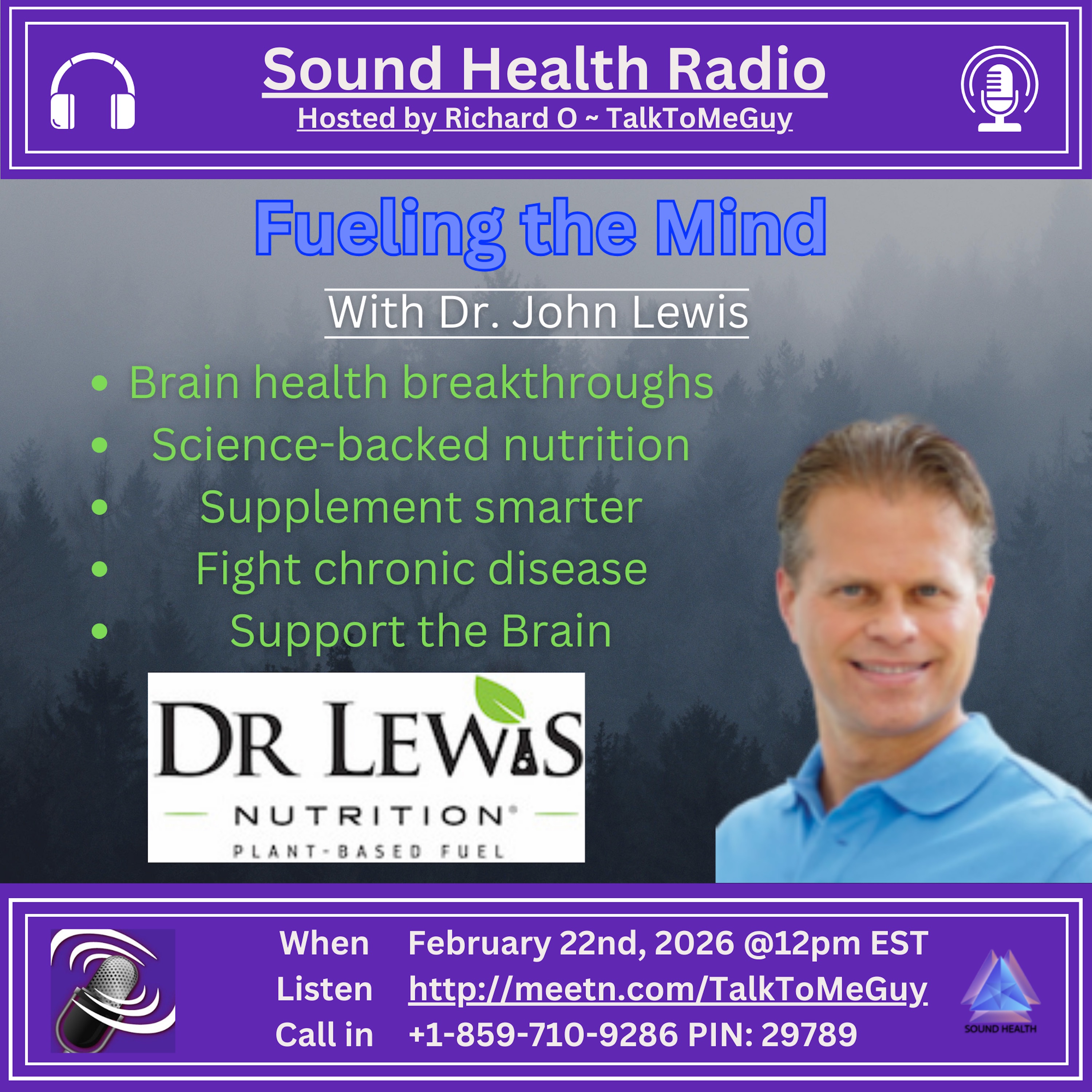







Dr. John Lewis - brings over 30 studies and 180 peer-reviewed publications to the conversation. His work has taken him deep into brain health, immune function, and the science of aging including a landmark study on Alzheimer's, published in the Journal of Alzheimer's Disease, examining the effect of Aloe Polymannose Multinutrient Complex on cognitive and immune function.
That research not only shaped his career, it landed him a TEDxMiami Talk on how dietary supplementation can improve brain health. The Founder and President of Dr. Lewis Nutrition, left academics to build a science-based business because he believed the science was too important to stay in a journal. For over 27 years he has eaten a whole-food, plant-based diet, taken key dietary supplements, and followed a rigorous daily exercise program. Dr. John Lewis has spent his career doing something rare in-the-world of nutrition science he actually lives what he researches.
Eat. Supplement. Thrive.
~
Please sign up for the email list for future notifications•
If you would like help starting your own show or podcast, as well as help selecting a microphone and setup for your voice; Please tap the microphone and leave me a message with your contact information and I will get back to you.
Or you can email: talktomeguy@gmail.com
More information at: SoundHealthOptions.com
Music
TalkToMeGuy: Greetings everyone.
TalkToMeGuy: This is the Sound Health Radio Show where we talk about the crossroads of the environment, our health and longevity with Richard TalkToMeGuy and Sherry Edwards is off working on the Sound Health Portal. I would suggest going to the SoundHealthPortal.com, scrolling down just a bit and clicking on the Watch How button. You'll see a short video explaining how to record and submit your first recording. Then go back to SoundHealthPortal.com, scroll down to current active campaigns such as cellular inflammation, biodect, neuroplasticity, or memory.
And choose one that is of interest for you. Click on that campaign and click Free Voice Analysis and the system will walk you through submitting your recording. You receive an email with your report back usually in one to two hours. To hear and share replays of this show, 50 to 60 minutes after you hear the outro music, go to TalkToMeGuy.com, scroll down that page and you'll see this show at the top of the episodes page. There are also hundreds of shows available there as well. There is a microphone icon at the bottom right corner of all the show notes.
If you'd like to leave me a voice message with a question for a guest or a guest idea for a show, you can do that directly from the site and I will be notified. With that, Dr. John Lewis brings over 30 studies and 180 peer reviewed publications to the conversation. His work has taken him deep into brain health, immune function, and the science of aging, including a landmark study on Alzheimer's published in the Journal of Alzheimer's Disease examining the effect of allopolymanos multineutrient complex on cognitive and immune function.
That research not only shaped his career, it landed him a TEDx Miami talk on how dietary supplementation can improve brain health. The founder and president of Dr. Lewis Nutrition left academics to build a science-based business because he believed the science was too important to stay in a journal. For over 27 years, he has eaten a whole food plant-based diet, taken key dietary supplements, and followed a rigorous daily exercise program. Dr. John Lewis has spent his career doing something rare in the world of nutrition science. He actually lives what he researches. Welcome, Dr. Lewis.
Dr John Lewis: Thank you so much, Richard, for having me.
TalkToMeGuy: We're going to dive in sort of in the middle, but I promise I'll bring us back. I'll just say it that way. Okay. Because you said something, you too. You said something about allo that really stuck in my mind. I've read or heard, I can't remember which by now, you say there is something very special about these polysaccharides. The complexity is amazing, and there's something beyond their biochemistry, something about the resonant frequency of these aloe vera polysaccharides. Would you talk about that a bit first?
Dr John Lewis: I'd be happy to. The reason I say that is because in my now close to 20 years of being in this polysaccharide research, I have seen time and time again with these particular polysaccharides from aloe vera and rice bran do things that I am not aware of anything else in the scientific literature that shows the same kind of capacity for healing effects. And so for me, when you see things over and over again, and of course, our research is really due to the funding. I mean, it's, if I had more money than I had, then I knew what to do with, I'd still be running all kinds of studies. But excuse me, because of the directives that we chose to utilize in our research, we focused on Alzheimer's and MS. We're sort of, if you will, a bit, at least to the outsider. I mean, to me, and I'll explain this as well, but because we chosen those two particular diseases to study, it again, for the outside person, it appears to limit what we're talking about related to brain health or even the central nervous system in general.
But anecdotally, when I've again been working with people with all sorts of issues across the board, everything that you can think of, and of course, I'm not talking about treating nutrition with disease, but when you provide these materials to someone, when someone takes them, again, with anything, I don't care what the condition is. And you see time and time again, these just profound results and these profound effects. For me, this goes beyond biochemistry.
And the reason why is, again, because of now this 20 year period in my life, combined with the decades of all these other folks who came before me, particularly Dr. Reg McDaniel and the work that Dr. Reg has done for close to actually over 40 years now. And then again, other people who have been involved in this journey with us, there just has to be something beyond biochemistry. And so that's where, at some point, I started thinking about resonant frequencies and everything in nature has some frequency, right? And so one theory is that with nutrition, people respond to things due to alignment or complementary frequencies. And I haven't had, again, because everything is at least the rate limiting factor when it comes to research is funding, I haven't had the money to explore that particular idea yet, but I do one of my intentions in my business because I got tired of running around in academics with my handout asking the government and foundations for money. But I do have the intention at some point in my career to be able to assess this theory and put it to the test of saying, how do these particular complex sugars compare to different types of cells in our body?
And to see if those resonant frequencies align. And I'm going to be shocked if they don't, because I really do believe that there is something very special about them beyond just the biochemistry of them themselves. And you mentioned the structure, these polysaccharides are beyond anything else that we put into our body. They are like 5D structures.
You cannot draw these things on a piece of paper. They are thousands of glucose units attached together by very sophisticated glycosidic bonds. And so when you compare them to amino acids, fatty acids, certainly vitamins, minerals, there is nothing else that even comes close to their complexity.
And that's also part of the distinction that they have that allows them to have this potential and this great ability. And lots of plants have polysaccharides. So I don't claim to be an expert in, for example, there are different types of seaweeds, the different mushrooms, even vegetables, grains, lots of foods, lots of plants have polysaccharides. But these two in particular that come from aloe vera and rice, I just, again, there could be something else out there that I'm aware of. And I'm not saying that there is or there isn't.
But yeah, I haven't seen anything else that even comes close. And, you know, right now, of course, protein continues to get all of the news. People continue focusing on protein and whether people are reading it enough or not. Fat, you know, it comes and goes depending on the type of fat you're talking about.
But anybody listening to our conversation today, you can do your own homework, you don't have to take my word for it, and you can fact check me all you want. There is nothing, you go to PubMed, the gold standard for the clearinghouse for all scientific information in the world. Any journal that's worth its salt is going to be indexed by PubMed. Just go and do your own research, go and do your own literature search, look for anything related to protein or fat, and then come back to me and tell me, yes, John, this study shows that these types of proteins, these types of fatty acids can do the same thing that the polysaccharides from aloe vera and rice bran can. You're not going to find it because I've looked and there's nothing else, there's nothing else like it. So it's an incredible material or two materials, I should say. And in my view of the world, if you're not taking them every day, you're missing out.
I've been on this formula for over a decade, I've had my mother on it for probably, mom's been on it over 13 years, my children started taking it when they were six months of age, my wife, she's a little harder case if I don't put it right in front of her face. But I look at these tools in the toolbox as right there at the top of the list. I mean, of course, we know oxygen is our first nutrient. We can't survive very long without breathing.
And then of course, after that, we need all sorts of different things. But again, in terms of the science, this is not an opinion statement in terms of what's been published in the scientific literature, I find very few other things may I put curcumin roughly in the same class because curcumin has had a profound amount of research conducted on it as well. The problem with curcumin, though, is it has to be formulated very specifically with either a liposome or a micelle to be able to allow its bioavailability to survive the metabolic processes. But other than curcumin, I just I'm not aware of anything else that shows just such incredible potential for ourselves. It's just amazing how these two polysaccharides can help people.
And again, with anything, I don't care what the name is on the label, with anything. And of course, prevention, obviously, we should look at prevention as just as important as treatment, right? We shouldn't just think of, oh, well, I'll just do whatever. And then when the time comes that I have now diabetes or cancer or heart disease or neurodegeneration, I'm going to do something about it know, how about we prevent all that stuff in the first place. And again, based on everything that I've observed in my career and my life to date, I just don't know anything else that even touches these polysaccharides.
TalkToMeGuy: Yeah, I'm an I have a degree as a master herbalist from 100 years ago, like in the 70s. So it's almost 100 years ago. And in my language, there would be herbs, let's say either Dongkwai for women would be the equivalent of Jinseng to men. And those are both classic, what are called adaptogens. And an adaptogen is an herb that helps your system come into it to its own state of homeostasis or balance.
Because once we're in my one of my lines about the human body is given the opportunity, it will heal itself. That's right. And I believe as I was reading the research and and listening and reading, that I think that aloe is an adaptogen. But we just don't know that of it, because it doesn't really have the same history. adaptogen comes, you know, that sort of comes out of the world of either Ayurvedic herbalism or more Chinese herbalism, actually. And I just have a sense that there's something about aloe that is that way that given the opportunity, the body will heal itself. Aloe gets into your system and it suddenly goes, Oh, that was the thing that I needed to help Greek get some balance.
Dr John Lewis: I'm glad you said that, because I agree with you 100%. And I would put rice grain in the same category. Okay.
TalkToMeGuy: And I believe that again, in 100 year time, years ago, I worked with a chiropractor is an herbalist. And he worked with the I don't remember, I never remember his first name, but it was a Dr. Kelly radical. It was Dr. Kelly's program.
This was not the chiropractor. This was a program that was available. There was a very lengthy intake. And it was for cancer.
And I just can't remember where he was located. And I worked with the chiropractor to add adaptogens into the protocols that Kelly consisted of and Kelly's protocol consisted of raw foods. You know, this is veratical raw foods, coffee enemas, and a lot of purified or distilled water. So he wanted to help people to detox. He was also heavily into high dosages of the variety of vitamins, you know, whether it was high dose vitamin C or other vitamins to help help support the immune system. And in my time of knowing that chiropractor for more than 10 years, he had more than a half a dozen clients that went through the program who came out the other side cancer free.
Amazing. And so I think again, you know, a combination of adaptogens, basically yours, lifestyle of eating clean food, exercising, sort of following what I call the blue zone diet. You're like, you're like the man of Sardinia, who was the primary, you know, like the number one blue zone in that study. And the shocking part for the people, you know, the man of Sardinia was the part that people didn't seem to they observed it, but not as much as I really when I interviewed them about that study, the book, the authors was that the men of Sardinia and spend their days walking up and down hills, tending to their sheep. So probably six to eight hours a day, they're walking up and down hills, physically exercising, but it's the word exercise is never involved. It's lifestyle.
Right. And that's from my reading and listening to some shows with you. That's your lifestyle is your like the man of Sardinia. Only you're probably going to a gym, but it's the same thing. It is. It's a lifestyle thing. So I think the, you know, the aloe, I'm pretty sure that aloe was in some form was part of the Kelly protocol.
It was probably, it may not be the same form that you're using, but I do believe that there was aloe juice or aloe gel or something that he said, you know, he advocated for people to consume while they were going through his protocol. So I have a question there. I just think that it's interesting, like 30 years later or 40 years later, really? It happened so quickly. You know, here I am talking about aloe again. And I've always thought was aloe was, you know, I'm one of those people that has an aloe plant outside the kitchen, because when you cut or burn yourself, you cut a piece off and you smeared on there and it's like, wow, that really helped that heal faster. So you've just taken that and put it into a great formulation and made it readily available for people to take, which leads me to ask you about, I have to ask about this 93 year old woman that was part of your study because the story about her was so heartwarming. But it's also, look, this happened. So would you talk about that 93 year old woman in your study?
Dr John Lewis: Sure, absolutely. Well, the profoundness of what we did, I think, really speaks to that lady as an individual in the study. And that is that we looked at people with moderate to severe severity of Alzheimer's disease. We didn't look at people that had mild severity, which is the kind of the earlier, less severe form, obviously, as it goes, as the description goes. But we wanted to study those folks because number one, they are pretty much looked at as lost causes by big pharma.
And number two, at least in terms of our center, like they never had any opportunity to participate in research. So Dr. McDaniel and I felt like we wanted to try to help the sickest of the sick. And this lady of the sickest of the sick, she probably was the sickest. She was, again, as you said, 93. She had been diagnosed with Alzheimer's, I believe it was like 12 years. I mean, that's even in that alone, her age and that number of years of having this horrific disease. You know, obviously, there was some incredible genetic foundation that she had just to even survive that long. But at baseline, at entry in the study, she was sitting in a wheelchair, and she didn't speak. She came to the center every day, or most days of the week for socialization, just to have, you know, something for her as some form of stimulation.
But the family, to my best recognition or recollection, had tried every FDA approved drug for dementia, any other type of therapy the center offered. I mean, that, you know, they'd pretty much gone through the whole nine yards, and there wasn't really much happening for her. And so you can imagine what your life would be if you just sat in a wheelchair all day, or sat in a chair and couldn't talk. And so the family, of course, agreed to put her in the study.
They didn't feel like they had anything to lose by that, and they didn't. And at some point, prior to the three month assessment, our intervention was for a year, and we'd collected data at baseline three, six, nine, and 12 months. So she starts taking the product.
And then even before the three month assessment, one day she came into the center walking, and she called one of our coordinators, Rafael, by his first name. And it always just gives me such a visceral response to this, because, you know, it's one thing to do wonderful work. You should be an ethical scientist. You should conduct science to all the standards that scientists recognize as the way to do things.
You should spend the money appropriately. You have responsibility to the subjects for their safety. There are a lot of things that go into running clinical trials.
But when you can actually have the opportunity to run science or run studies that actually show immediate benefit to people, that to me is nothing, there's nothing that's, that beats that, you know, in terms of being a scientist or a researcher. And he, as you can imagine, Rafael started crying like a baby. I mean, it was so emotional for him, so powerful for him, because again, the staff were, you know, all the staff members were looking at this lady like basically, well, you know, we can't really do anything for her. And for her to call him by his first name like that, it was just so powerful for him. And I'll never forget him telling me that story. And when he, when he retold the story, he started crying again because of just how powerful that was. So that was probably, I mean, we had several powerful anecdotes in running that study, but that was that lady's case.
And as you can imagine for the family, that was very powerful. And, and not anything like, you know, what you would experience. I mean, I'll put our study results up against any other study in Alzheimer's of any kind of treatment or intervention. And you've probably heard me say that already, because again, there's nothing else in that first paper of four that we've published from that study. There is nothing else like it in the scientific literature. And that lady's response is the perfect indication of why. Because again, how do you explain that, right? Like, how do you, how, how can you have a lady that sick, that impaired at that age, and then respond that way to enhanced nutrition? It's just so powerful. And it's, to your point, it speaks to the body's ability of being able to heal itself when you provide it the raw materials that, that can help it do so.
TalkToMeGuy: And were you within that study? Were you able to reduce her? I don't mean you, because you're not that kind of doctor. And I mean that in a kind way. Were they able to reduce the drug she was on? Or was this in addition to whatever pharmaceuticals she was already taking?
Dr John Lewis: So yes, that's a good question. So the study design, and this is sort of a general statement, but it's very applicable to this study in particular is you want to try to minimize as much as you can what are referred to as external threats to validity. What does that mean? Well, that means simply that you have a treatment. It could be, in our case, a dietary supplement. It could be some, some type of exercise training. It could be a stress management program.
It could be a method to help people sleep. You know, there could be lots of different behavioral, behavioral strategies that we as researchers would want to test to see if it actually works. Well, unfortunately with behavior, you have all of these other things, especially when it comes to anything in the nutritional science realm, that potentially could be a threat to whatever your treatment or intervention is. And so the way we structured the study was we're not changing medication. Like the only, the only thing that we told people is if somebody has a heart attack or a stroke, you know, some life threatening event, and they have to be taken to the hospital and stabilized and giving things, you know, or surgery or whatever.
Obviously, those are the situations where your standard day goes out the window, right? So you have to change it. But we didn't want to change anything.
So that way, at the end of the study, we can say, well, with all things being equal, we didn't change medication. We didn't change diet. We didn't change physical activity. We didn't change socialization. We didn't change any other variable in the daily routine.
We just simply added our dietary supplement to it. And that way, as much as possible, you can then say that you've minimized all those external threats to validity. Is it perfect? Heck no, you know, humans are not perfect.
Humans behaviors are not perfect. So you can't, with 100% certainty, say that all those threats were eliminated, but you can minimize them to the degree that you can by, by structuring your study the way that we did. So I mean, you're asking me a question that I quite frankly, I'd have to go back and check my notes and see if, you know, after she got in the study where medications changed. I mean, we didn't really, again, that really wasn't the primary goal of the study to do that level of monitoring. That could have happened.
I won't say that it didn't, but I can't say that it did. All I can say is that from baseline, you sign the informed consent and you're given the, you know, the caregiver in most cases, I mean, some of these people were still a little bit with it. So they wouldn't have necessarily been able to manage themselves completely. They certainly couldn't, but, you know, they were at least still with it enough to maybe understand what the caregiver was going to be doing as part of the study protocol. And so the best I can say is that probably not, like probably the lady just continued doing everything else that she was doing prior to being in the study. And so that way, again, we minimize these external threats to validity.
TalkToMeGuy: Wow. That's a whole separate show. I'll keep, I'll talk that, I just have a whole series of thoughts. I, well, really briefly annotated in the audience is tired of hearing me talk about it, that about 12, 13 years ago, I was hospitalized, ended up having 30 hours of surgeries and lived in a healthcare facility for a year. So I have a lot of research of my own from living in that world for a year where you would have people come in and I was ambulatory for three quarters of that.
So I would get up and walk around every day. Right. Can't go too far in a hospital gown. So, you know, where are you going to go?
Right. And, but I observed from that, because I'd already had, I got the herbal degree in the 70s, I would walk around and I would talk to people, because that's what I do, is talk to people. And it would be, it would blow my mind to see somebody be in the facility, be conversational, be, you know, yes, they had an incident or a thing or occurrence or they had an injury, you know, whatever the circumstances is.
This was more for elderly people. And then they would go away for a little while and then they would end up coming back in a couple of weeks. And because I was there for a year, I got to see this a lot. And the second time they would come back, I would see them, I can think of this one woman in particular, I would be out for a walk and we'd say hello and chat for a moment and I'd keep on walking. And when she came back, they put her on a drug that was such a strong, so horrific that she was barely in there. Wow.
You could, she would be sitting in a wheelchair, they'd prop, it's the classic scene where they'd prop her up in a wheelchair, put her against a wall so she was safe. But that was it. There was no interaction, there was no nothing. And it was only because that I knew that she was in there. And the reason that she was drugged, because I knew the night nurses, we could talk about it, that she'd been, you know, had some behavioral issues. And so their solution for that in a 250 bed facility was to drug her into a stupor. That's my judgment, that's my attitude, that's my commentary, to her into stupor.
So she would be non-combative. And so every once in a while, I would see her when she was in that state and I could walk over and, you know, touch her on the shoulder and slowly bring her up enough to have connection with the person. She would open her eyes just a little bit and be in there and like, take a moment to like reach up and squeeze my arm. She couldn't talk, but she was in there. And so then she eventually got off those drugs and we would talk about that being trapped in that state of, you know, your inner facility where they want everybody to not be noisy, especially with 250 beds.
That's a lot of, you know, noise. Sure. And just to observe that as the idea of even in that state, my suspicion of what I know, and I mean that in a good way, something like aloe, like your product, could have still had benefit to her system. There's no question about it. Yeah.
I don't really have a question there. It's more of an observation of having lived in that world of, wow, wouldn't this be amazing if everybody in this facility, I worked with somebody in hospice on the Monterey Peninsula and she would have me come in after hours, which she wasn't supposed to, but she wanted me to make some teas for people so they could sit for their pain or for their whatever condition. And it's the same thing where the people are in a state of, you know, being managed under medical care. I'm not anti-medical care with the qualification. I'm suspicious of medical care, but I respect it.
You know, I mean, the medical care, the surgeries that I had saved my life. So I can't be that angry with them, but I can be plenty angry with them because of this example of this woman. They get somewhere, they get drugged into a stupor and that's it. They're done. That's as far as Western medicine views them. We can't do anything for her, so we're just going to keep her quiet and calm versus more your approach of what are you eating? What are you drinking?
Let's add some of this aloe. It's alternative practitioner because you buy your foundation and I'll jump to this. You describe yourself as a physiologist by training. How did that background lead you to polysaccharides and aloe vera research?
Dr John Lewis: Great question. Well, that was all through, you can call it whatever you like, fate, divine intervention, good luck being in the right place at the right time. I don't know. I mean, I met and I just mentioned him briefly a little while ago, this gentleman by the name of Dr. Reg McDaniel about 20 years ago. He met through a mutual kind of acquaintance who turned out to be on some level a fraud actually, but you know, not everything wrapped in a piece of, you know, glittery paper doesn't necessarily mean that what's on the inside may or may not be what you, but anyway, Dr. Reg, just a tremendous man. This guy's going to be 90 this year in July and still goes to work every day, still like you and me fighting the good fight, looking for answers to help people, looking for money for research, etc. But he was a pathologist at a hospital in Dallas 40 years ago and he got introduced to this HIV group of, this guy, group of guys that had HIV and they were taking this alopolysaccharide product and in 1985, of course, HIV, if you got HIV, it was probably not long for the world after that. And he discovered that or they discovered and they were asking him asking him to help them validate it because of his background as a pathologist.
They had no viral load of the virus and their CD4 cells were normal. Total medical heresy. And, you know, Reg is just a, I mean, I shouldn't say just, he's a pathologist running his unit at the hospital. He couldn't give, you know, a rip about nutrition or dietary supplements. He's just doing his job as a pathologist, but thankfully, those guys would not take no for an answer and it eventually completely changed his life over the next couple of years. He went from being a pathologist to being a nutritionist to completely, you know, left his world as a pathologist and started looking with his colleagues at Texas A &M at the vet school, why these polysaccharides were just incredible. And so then fast forward 20 years and he and I meet through this again, this sort of unusual character.
I'll be kind. And then Dr. Reg starts telling me about sugar from aloe vera. And I'm thinking to myself, what in God's name is this man talking about sugar from aloe vera?
I mean, it was just so foreign to me. And like you were saying, you, you know, you usually probably 90 something percent of the time you mentioned aloe vera to anybody. And the first thing they're going to think of is, oh, yeah, that's a great solution for your sunburn or for a cut.
You don't even think of why it's working or you certainly don't even think of, well, wait a minute, there's sugar in there, you know, like nobody even knows to think of that. And so as he's educating me about his 20 years, and again, it covers everything from A to Z. I mean, literally not even not even an exaggeration. He's documented over 800 different, let's call them health challenges, because, you know, again, to be more FTC compliant, we don't want anybody from this conversation leaving it and saying, well, Lewis said you could use nutrition to treat disease. I'm not saying that at all.
And Reg never says that. But But when he was telling me about all these incredible, let's just call them success stories where somebody has a condition and they take these polysaccharides and then, you know, like you were describing about the chiropractor, so many weeks, months, whatever down the road and they no longer have a condition, you know, you're like, wow, like this is incredible, how the body can do this is just phenomenal. And so again, he's got over in his files alone, and I don't know how many, I haven't really been cataloging them like that, like he has, but over 800 different things, including which maybe is the most phenomenal genetic defects in children.
He has several cases of children that were born as a dwarf and then their parents had heard about these polysaccharides somewhere through their network, put their children on these things, and then eventually their children grow up to be with a normal structure. Like how do you explain that? Exactly.
That's a wow moment. Or people with stage four, in-stage cancer, I mean, these were probably the cases that blew me away the most. People that were in hospice, which is typically your last step before the funeral home, being given up for dead from a conventional medical perspective, and already have had surgery, chemotherapy, radiation, the entire nine yards.
And this is, I mentioned one of those cases in my TEDx Miami talk, and that was really what kind of, you know, put me over the edge of saying, okay, wow, I got to get into this. And giving these folks these polysaccharides, and then at some point later, they're cancer-free. Like there is no more cancer that can be detected in their body. And then they leave hospice.
They go home. And this one particular gentleman that I've mentioned in my TEDx Miami talk, as of last year, Reg had still spoken to that man. Over 25 years later, he was sent to hospice to die. And now he's still alive 25 years later, cancer-free. So those were the kinds of things that Reg was telling me about 20 years ago. And so, yes, I mean, oh, every, it didn't just change my career.
It changed my entire life. I mean, you mentioned I'm a physiologist by training. I didn't know anything about this stuff. And that's not being disrespectful to my professors because they didn't know it either. The only thing I learned about saccharides in general in biochemistry was that they essentially function as most people think of saccharide sugars or carbohydrates, generically being synonymous, is that they are a source of fuel for the cells.
And that's absolutely true. They do provide energy for the cells. But this ties all the way back to where you and I started this conversation related to what in the world is it about these things from aloe vera and rice bran that are so special.
And that's why they're just way more than what we've documented in our research, way more than just a source of energy for the cells. And so when I'm meeting Dr. Reg 20 years ago, and he's sharing all this information with me, and then around the same time, he happens to give a lecture talking about his work with a few people with Alzheimer's and Parkinson's. And there was a lady in the crowd who was listening to his lecture and lo and behold, she and her husband had lost four family members to this terrible disease of Alzheimer's.
And she and her husband developed a relationship with Reg. They had some money from their business. They wanted to make a donation to research.
Their only requirement or request was that it would please be in Alzheimer's disease due to the special, you know, just impact that that disease had had on their family. And so Reg, not being affiliated with any university or research organization, I just happened to be in the right place at the right time. I literally just happened to be there. And he called me up one day and he said, John, we've got an opportunity to run a study.
The only requirement is we the family's asked to make sure that it is done in Alzheimer's been, you know, being in Miami with lots of elderly people here, lots of, unfortunately, lots of elderly folks with with different forms of dementia. It was an easy, you know, call. And so that's what we did. I mean, I had I dove into it, not feet first, I dove into it face first, because Dr. Reg is the kind of guy that you meet him and you and you immediately feel this man's sincerity, his honesty. The guy does as they say, the guy does not have a bad bone in his body. He like me started out as a scientist.
He wasn't trying to be a businessman. He, you know, he was a scientist who loved pathology, but it that completely shifted from pathology to nutrition and the study of these polysaccharides. And so I've always been the kind of person that just has an openness to meeting other people. And I have a bit of a chameleon quality to my personality where somebody is explaining to me what they do and how that helps them. And if it resonates with me, if it feels good to me, then I I'll say, let me try this. And so that's just kind of again, who I am and what I've always chosen to be in terms of allowing my life to sort of unfold my road, if you will, my journey to unfold and be able to to take on things that make sense to me. But it's been an incredible ride at these last 20 years.
It's hard to believe it's been that long. And so that was that was the only reason that I got into this. I mean, I was already conducting research and nutrition and supplements and exercise at the university. And I'm proud of all that other work you mentioned that I've conducted about 30 studies in my career. I mean, I'm very proud of all that work, but nothing else comes close to what we showed with these polysaccharides.
I mean, all the other cool findings that we made part of all these other publications that I have to my credit are all great, but not even close to the impact that that what we've showed in these particular clinical trials with these polysaccharides. So that's that's where I am. That's where I came from. Unfortunately, I will say this last point before you go to another topic. I didn't know it at the time, but the Alzheimer's study and we didn't even really talk about we only talked about the one lady so far. But the Alzheimer's study actually was the beginning. I didn't know it at the time, but it was the beginning of the end of my academic career because we ran this study. We got these incredible results. And then I thought, oh my goodness, I'm going to get more money than I know what to do with from NIH and Alzheimer's Association.
You know, all these big people with, you know, these incredible budgets to fund folks like me that do this type of work. And I ended up getting nothing. I got nothing in my two attempts with NIH and in my two attempts with Alzheimer's Association to say, hey, look, look at what we've shown, look at the work that we've done. And so it was the beginning of the end. And that's why I ended up in the dietary supplement world. But I don't have any regrets. I don't, I'm not bitter about it. It's unfortunate that the research kind of got stopped dead in its tracks due to lack of funding. But again, my goal, and I don't know if Reg will still be with us when it happens.
I hope he will be. But that's the only, I guess you could say, disappointment that I have in my journey so far is that it's, it's sad that that I didn't have more money to continue down this line of research. If I had, I probably would still be in academics. I it's okay because, you know, we all have a story and nothing is guaranteed and you certainly can't take anything for granted. So that's why I'm the person that I am today of sharing this message about these polysaccharides and how beneficial they can be for people. And I'll continue, you know, doing it from a science base until we have more money to conduct more science and then we'll continue publishing more in the future. But it's been a, it's just been a heck of a journey these last 20 years. It's really been something that I didn't even dream of as, as I started into my research career as a young guy, not really knowing too much about how the research process works at a university other than the people that I was being mentored by and learning from them. But when I truly got into it as a, as a principal investigator, as, as we call people that actually run their own studies, it, it showed me how powerful or how powerful is probably not the best word. It showed me how challenging that environment is because academic research is just so, so challenging.
And if you're not doing pharma or if you're not doing genetics, something that can either be licensed to a big pharma company or to a big biotech company, if you're just doing nutrition, like I was at a very conventional medical school, you're really up against a lot of walls. And after 20 years of that, I basically, I had run my course.
TalkToMeGuy: Well, once again, this is another show. We could do a whole other show on this. So I'll say this briefly, that we're in a, we're in a world of what I call sick care.
Yes. We're not really in a realm of healthcare. And it's in, and the bad news, from my view, is that our sick care system is funded by the pharmaceutical industry.
That's right. Because it's a profit, it's a for-profit enterprise. And so it doesn't, I mean, I have, I'll say it doesn't, you know, people who I've known down through the decades from the herb store and forward who had amazing substances and products, but ultimately they ended up, they went through that, the, I can use this word on air, the hell realm of grant writing, because I read or heard you talk about grant writing, and that is truly a hell realm because it's just a beating writing grants who eventually spun off and did very much what, like you are doing, where you're passionate about the science behind what you're doing, whether it be herbs or supplements or Nutropics or whatever.
And they end up being an expert in that, and then they come up with, sometimes, oftentimes, some kind of product because they can't not. I know that's bad English, but I can't help myself. That's the way it has to be said.
You can't not do this because you have, because somewhere, I'll say that the aloe is whispering in your ear. And right. No, it's going over here, buddy. No, come on, come on, follow it. You know, and it's weird, but it's true. There's some sort of, you know, and I say, I'll have to go back and look at the Kelly protocol, where I can dig up on it, but I swear there was aloe in there someplace, but it was probably something because they used a, not a centrifugal juicer for juices, they used a compression juicer because it doesn't damage the cell wall so much.
And I just have the feeling that somewhere in some of his juice recipes, there was aloe leaf that you just would crush and then drink that gel, that raw gel fresh. And so I just, I think once you're, you know, you're bit by the bug in a great way. Right. And so much so, we had scheduled a while back to do a show and then you got that got bumped because you got really busy, not you having a baby, but your wife having a baby. Yes. And congratulations on that. That's a other thing. And then I noticed, again, reading, writing, I don't know, you started your daughter on polysaccharides at six months.
Yes. And I'm certain there are grandparents somewhere thinking, saying, what are you thinking? There's that, knowing grandparents. But I mean, so you, you're not kidding about how you feel and respect this substance, this product, these polysaccharides. So could you talk to people about the idea of putting their six month old on polysaccharides?
Dr John Lewis: Absolutely. And, and Phillip is on them now too. So my view of the world is that, I think I mentioned this a little bit earlier, is that these polysaccharides are unlike anything else that mother nature provides for us for a healing effect or benefit. And so I want my children to be as healthy as they possibly can be. And I don't look at any other thing, any other material, any other compound, any other substance that comes from mother nature that I could give them to help them do that. And so every cell in the body, regardless of how old we are from the time we're born all the way to our last breath, utilizes these polysaccharides from head to toe and don't be misled again, just because we focused our research on neurodegeneration. It's every cell in the body, not just the ones in the central nervous system in the brain that use these.
So I just look at this as a lifetime, you know, sometimes people even ask me the question, well, once I feel better, can I stop taking them? I'm like, why would you want to do that? Do you want to stop breathing?
Yeah, yeah, yeah. Like, do you want to stop using oxygen? Like, why would you do that? Like, there's no logic to that question either. Although I guess, you know, sometimes maybe people look at it like a car or something. I don't know. It's odd, though, when I occasionally get that question.
But yes, you're not limited in terms of your age to be able to utilize these things. And it's just, for me, it's all about, so here's maybe a good point in the show to mention my view of the immune system. Of course, we know the immune system is our first line of defense against any type of infection, be it bacteria, virus, fungus, whatever. So that's clearly a role of the immune system that most people understand and appreciate. But most people don't know that the immune system is what I like to refer to as the analogy of the symphony orchestra, the conductor of the symphony orchestra. So if you think of the conductor as the immune system, and then all the pieces of the orchestra, the different music pieces as being all your other major organ systems, what the immune system does is it does exactly what the conductor of the symphony does. The conductor is talking to the music pieces through that language of hand signals and whatever all that is. And I know nothing about that, but just observing an orchestra.
But you have the conductor who's responsible for keeping everything in balance and harmony and playing the way they're supposed to so that the music sounds appropriate. Well, the immune system is talking to every other major organ system, be it your cardiovascular system, your endocrine system, your musculoskeletal system, your central nervous system, all the major organ systems. If your immune system is not functioning properly, and it does that with all these different signals that are typically these proteins we refer to as cytokines and growth factors that have these different pro and anti-inflammatory components to them or effects to them, then you cannot possibly expect your cardiovascular system or your central nervous system or any of the other ones to be working properly. So that's a very important role that the immune system has that I look at the immune system as being just as important as anything else that we have in our, you know, this machine that we refer to as a body to work to our advantage. And so what these polysaccharides do, generically speaking again, from like the, let's call it the helicopter view, is that they are signaling materials or signaling mechanisms to our immune system. And this goes back to all that coded information that I referred to back when we started this conversation, that they are so dense in information that the immune system says, wow, this is the information that I need. And remember, this is through the lens of our genes. Our genes interpret this information that comes into the system, either through the mouth or absorbed through the skin. And then it guides the cells and how to function properly.
And so this is the reason why we want to have a surveillance modulated, even to use your term, adaptogenic immune system, because that to me is almost foundational. I mean, of course, we're no one without our brain, our brain goes without without saying, we certainly cannot survive without our heart and our liver. I mean, there are obviously components that we need for ultimate survival, our kidneys.
But when you look at that role of the immune system and how it talks to everything else, and how it keeps everything else in balance, that is so crucial and so important, not just to our survival, but to being optimally healthy. And that's the reason why I started my children on these things when they turned about six months of age, I would have given it to them from day one, but they're a bit thick. And they're too thick for an infant to suck through a nipple of that size, they just wouldn't, you know, pass, they wouldn't flow through it.
So I had to wait till they were a little bit older to be able to have a nipple size where I could get them through the nipple. But yes, I just, I am completely obsessed about making sure that I have these polysaccharides in my diet, and in my family's diet every single day. And I will from till my last breath.
TalkToMeGuy: And I'm going to jump to a question in chat. Somebody's asking, can daily brain care do anything for high blood pressure?
Dr John Lewis: I, you know, I, again, I've seen it do so many different things for so many different conditions. And please remember, let me just make sure we're very clear here, we're not talking about using nutrition to treat disease. That's the pharmacological model of taking a chemical, a synthetic material, altering a metabolic pathway to treat a symptom of a disease. That's the pharmacological paradigm. The nutritional model says you provide the raw materials that the body needs to function properly and to heal itself through its own inherent intelligence. And then potentially anything possible is, you know, up to your body's own intelligence to do. So I would say it's, it certainly can't hurt to try.
We're not, we're not treating hypertension with nutrition, but we are providing the raw materials the body needs to potentially heal itself. So it's a, it's a possibility. I won't say, yes, it will work, but it's a possibility.
TalkToMeGuy: Well, and again, somewhere down the road, it makes me want to go into Chinatown in San Francisco and have a conversation with them because they have such a deep knowledge. It just seems like Aloe could be an adaptogen because it's helping, it's supplying the body with something that it allows, that is allowing the body to go, oh, that's the thing I needed. And then the body can choose to utilize it to go up or down.
Dr John Lewis: That's right. Exactly. Well, in that, I'm glad you said that again, because it looks like we're going to run out of time today, but I'd love to come back on your show.
TalkToMeGuy: We can go a little long. It's okay. If we go a few minutes long.
Dr John Lewis: Well, anytime you want to have me on again, because there's so much research to talk about, we're not even, we're just barely scratching the surface of it. But in, in two of the last papers that we published, both from the Alzheimer's and MS studies, we looked exactly what you're referring to. We looked at the TH1 to TH2 ratio of the immune systems functioning. So TH1 is your pro-inflammatory side, and TH2 is your anti-inflammatory side.
And we want those to be relatively in balance, but we have some really incredible effects where we showed in response to taking our, our formulation that we got really profound changes in those TH1 to TH2 ratios. But that's all I'll say about that for now. But yes, I, I'm with you there 100%.
TalkToMeGuy: And so you, you give it to your children. So you're like, I was going to say Dr. Spock, but not the one with the pointy ears, not the pediatrician. In the sense. Right. The other one. The pediatrician. Yeah, the other one, not the pediatrician.
Definitely. You see, he was a very classic doctor. It's just like, you know, passing the Star Trek health device, whatever that thing is called. I always forget what that's called, the reader over the body. But instead, it's the tricorder. That's it.
Thank you. The tricorder. But instead, the tricorder is actually producing something that is allowing the body to go, oh, that's what I've been looking for. Yes, exactly.
And I think that part of, and I think that part of why there is so much sickness or imbalances, I look a lot at imbalances in the system is because one of my favorite hashtags, sadly enough, is total toxic load. And so when I look at, I grew up near the Salinas Valley. And so I used to, we would, every couple of, once a month, we'd drive up to what is now known as Silicon Valley to visit my grandparents.
And when we'd be driving, we would be driving through the Salinas Valley. And because it was so much fun, I would stick my head out the window to be crop dusted because we had crop dusters flying from one side of Highway 1. You know, spraying probably DDT, because that's what that vintage was, spraying whatever on the plants. And then they stop for a moment, spraying while they go over the highway, which is not very wide. Back then it was four lanes and start spraying instantly to get on the other side.
And it's amazing to see. But I was regularly dusted for those years of driving up there because, wow, how cool is that? Ooh, never thinking about that probably was DDT. So it's gotten, now we're at a level of, we can do a whole other show on Glyphosate. I've done a making biofuels. And those biofuels are often derived from the GMO corn. And she has written about and talked about the fact that, okay, yes, but you're making a biofuel, that is not breaking down the glyphosate. So that means we're now vaporizing glyphosate into the atmosphere by cars driving around.
Right. So just that, just glyphosate, just the evil dreaded horrible, so many bad words, glyphosate. I just think there is so many microplastics, everything that's in the environment, all the things that are irritating our immune systems. I think we need every positive adaptogen, there are no actual negative adaptogens, as I say that way, all every adaptogen we can get. And I'm just, the more we talk, the more I think like, allo is now going to your form of allo, because it's so easy to take.
And I'll ask you about that in a moment. It goes into this pile of things like ginseng and dongkwai, and there are other Chinese herbs that are adaptogenic in their nature. And I think we need all the adaptogens we can get, because the environment is not getting any cleaner.
And I will just say, with this administration, the aggressive destruction of the planet by more toxins, it's not going to get better for a while. No. I don't have a, well, no, I'll lead this to this question. So let's talk about, for, and take us a couple of minutes over if needed. I'd really like you to people to know about your daily brain care. So could you talk about that as a great delivery system, because you have it both in capsules and even in powder for those of us that are fearless about powders? Yes.
Dr John Lewis: So as I mentioned, we ran these two clinical trials, which I'd love to come back on your show and talk more about the actual studies. But both of these studies from Alzheimer's and multiple sclerosis were foundationally they had in their formulas, the allo and rice bran polysaccharides. And we, again, just got tremendous success. I tried painstakingly to get more research funding to to stay in academics, to keep that line of research going. I got rejected. So basically I went from full-time scientist. I still have a position at the university. I still do a bit of teaching here and there, mentoring some medical students and whatnot. But I created daily brain care out of all this research.
So we have four articles we published, as you know, from the Alzheimer's study, three articles we published from the MS study. And I put it, I put daily brain care up against any other product on the market. And I don't say that flippantly because there are so many products out there that, you know, they may be good. I mean, they may have decent materials in them, but were they actually studied like I did, like my colleagues and I spent all these years running these studies, analyzing the data, publishing the results, most or not.
I mean, there's really, daily brain care is truly a unicorn in the market because of how much work that went into validating it. And again, I put my name on the label. I mean, it's under the Dr. Lewis Nutrition brand. So it's not like I'm trying to be disingenuous or hide something. The only thing that is a secret, of course, is the formulation itself.
That is my intellectual property, my trade secret. But I mean, all the studies you can read, all the articles from the studies, you know, that part of the work is a completely open book if you go to PubMed and do that. And of course, people can go to our website and read summaries of all the research, read about all the different ingredients. But I just feel like to your point about needing adaptogens and needing, you know, this type of tool in our toolbox to prevent us from getting all of the typical killers that are ravaging us today, to me, this is right at the top of the list with everything else out there that's been well researched. And again, for people that are struggling with, you know, whatever the case may be, we know that chronic inflammation, chronic immune dysfunction, both of those concepts in general have significant links to everything we're dealing with today, whether it's neurodegeneration, cardiovascular disease, cancer, diabetes, obesity, mood disorder, you name it, all those different things that people get afflicted with have very significant components to either chronic inflammation or chronic immune dysregulation or dysfunction. So this is where you can enter daily brain care enters the room and now suddenly you've got this just incredible warrior, if you will, on your side to help you combat this stuff.
And I don't have anything. I mean, I would, for full disclosure, if I had, you know, something tragic, I would be happy to tell you and your listeners, I don't have anything, but I definitely want to prevent this stuff from happening to me in the first place because all four of my grandparents, every one of my aunts and uncles, my father, they all died before me of the typical chronic diseases that are killing us. And so I hope that I can't guarantee it, but I hope that with daily brain care and the way that I eat and the way that I exercise and the way that I live my life, hopefully I will just die of old age and not have to deal with all these different things that unfortunately took out so many of my relatives. So you have very little to lose by trying daily brain care, again, as what I would look at as one of the primary tools in your toolbox.
TalkToMeGuy: There's so many directions I could go, but we'll be here for another hour.
Dr John Lewis: That's right. I mean, so many directions we could go.
TalkToMeGuy: I so want to talk about inflammation. I'm such a fan of, I think that the bodies sending out a signal anytime something becomes inflamed. Like the obvious one is you're playing soccer and you hit with a ball hard enough to cause an inflammation in your leg for a while. I think that's the body going, hey, hey, hey, hey, hey, pay attention to this area.
I know that it has a bunch of biological activity, what the inflammation is doing and why it's there, but I just think that inflammation is a real like, hey, because if you have inflammation long enough, it's going to probably end badly. That's right. Okay. We have to stop now. Nothing personal, but we could casually go on for so long.
TalkToMeGuy: That was really great.
Dr. John Lewis: Please have me back.
TalkToMeGuy: I will have you back. No, absolutely.
No, you're going to come back. I'll try and restrict myself, but it's really hard because you have such great material and I'm such a fan of supplement long-term beneficial effects. I think it's the way to go.
Dr John Lewis: I appreciate your kind words and I appreciate the time today and the opportunity to share my story and for all the folks on listening to us. I'm grateful for you guys as well. If anybody has questions, they can go to our website, drluisnutrition.com. Again, we have a phone number, we have an email address, reach out if the information there is not enough, but I just love helping people. I mean, my goal in my business is to eventually touch a million lives with these polysaccharides and helping people understand what power they have and to be able to help people. That's my mission in life and that's what I'll do till my last breath.
TalkToMeGuy: It could be a long time yet. Hopefully. Yeah, I have a grandma that lived to be 106, so I have a... Oh, wow. That's awesome. I need to... She was a pioneer, literally. Okay, we'll stop now. Thank you so much, doctor. That was great.
Dr. John Lewis: Thank you Richard for having me.
TalkToMeGuy: And everybody have a great rest of the weekend and we'll see you next week. Bye-bye.