Finally Hopeful: Treating Depression from the Inside Out
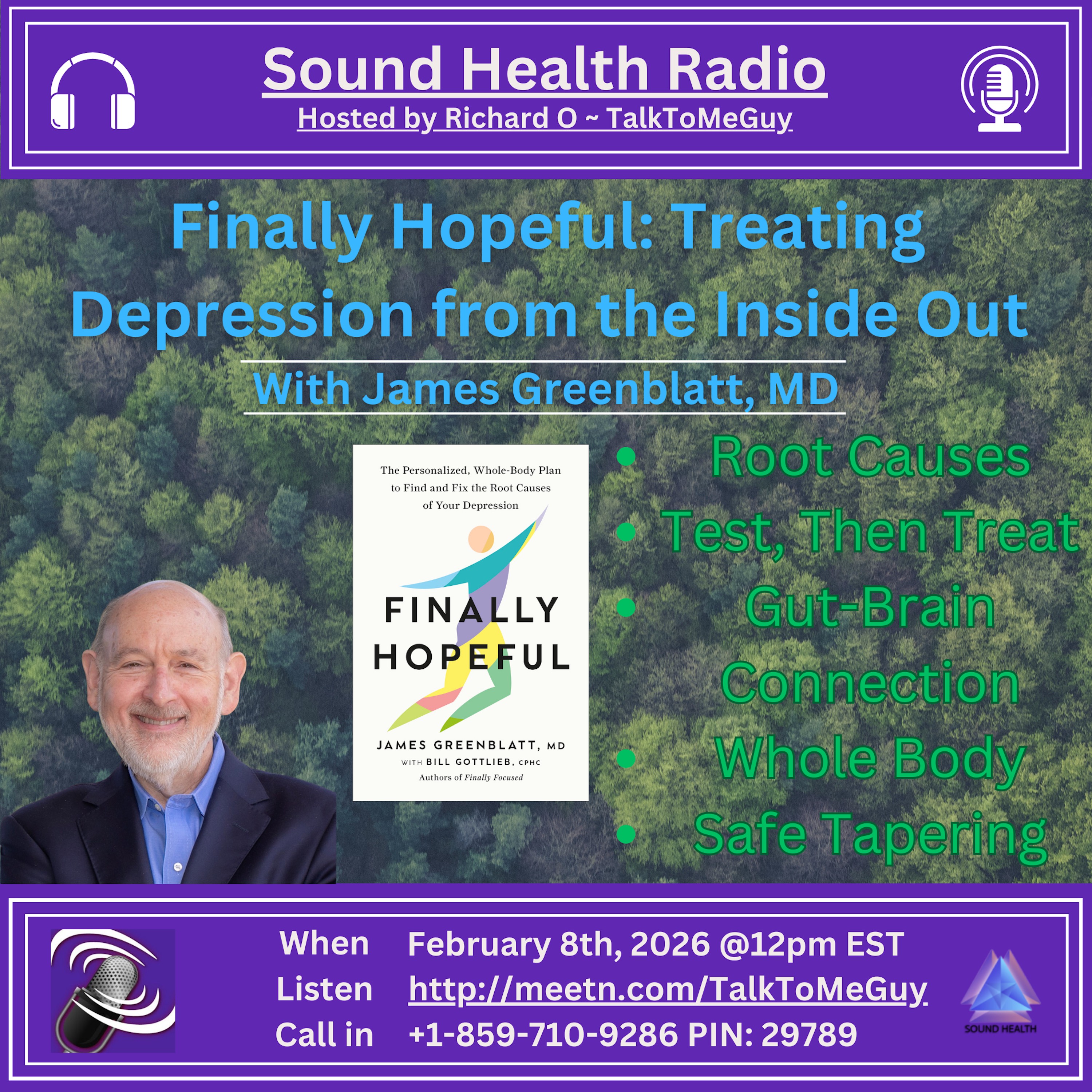


Dr. James Greenblatt, is a board-certified child and adult psychiatrist who has been treating patients since 1988. He is a pioneer in functional and integrative medicine, trained at George Washington University and Johns Hopkins.
Dr. Greenblatt is the author of several books, including his latest, Finally Hopeful: The Personalized, Whole-Body Plan to Find and Fix the Root Causes of Your Depression. He is also the founder of Psychiatry Redefined and Finally Living, a precision functional psychiatry clinic.
He has said: 'Psychiatry can do better. Much better. But, only if clinicians and their patients take advantage of decades of largely ignored research that shows depression is not all in your head. Many of the root causes of depression are in your body - in your digestive system, your hormones, your immune system, and most importantly, in your brain and its connection to all those other systems.'
One other great book by Dr Greenblatt: Nutritional Lithium: The Untold Tale of a Mineral That Transforms Lives and Heals the Brain—the definitive guide to lithium’s role in psychiatry
~
Please sign up for the email list for future notifications•
If you would like help starting your own show or podcast, as well as help selecting a microphone and setup for your voice; Please tap the microphone and leave me a message with your contact information and I will get back to you.
Or you can email: talktomeguy@gmail.com
More information at: SoundHealthOptions.com
Music
TalkToMeGuy : Greetings everyone. This is the Sound Health radio show where we talk about the crossroads of the environment, our health and longevity, with Richard TalkToMeGuy and Sherry Edwards is off working on the Sound Health portal. I would suggest going to the SoundHealthPortal.com, scrolling down just a bit and clicking on the Watch How button. You'll see a short video explaining how to record and submit your first recording. Then go back to SoundHealthPortal.com, scroll down to current active campaigns such as cellular inflammation, biodect, neuroplasticity, or memory.
And choose one that is of interest for you. Click on that campaign and click Free Voice Analysis and the system will walk you through submitting your recording. You receive an email with your report back usually in one to two hours. To hear and share replays of this show, 50 to 60 minutes after you hear the outro music, go to TalkToMeGuy.com, scroll down that page and you'll see this show at the top of the episodes page. There are also hundreds of shows available there as well. There is a microphone icon at the bottom right corner of all the show notes.
If you'd like to leave me a voice message with a question for a guest or a guest idea for a show, you can do that directly from the site and I will be notified. With that, Dr. James Greenblatt is a board certified child and adult psychiatrist who's been treating patients since 1988. He's a pioneer in functional and integrative medicine trained at George Washington University and John Hopkins. Dr. Greenblatt is the author of several books, including his latest, Finally Hopeful, The Personalized Whole Body Plan to Find and Fix the Root Causes of Your Depression. He's also the founder of Psychiatry Redefined and Finally Living, a precision functional psychiatry clinic. He has said, psychiatry can do better, much better, but only if clinicians and their patients take advantage of decades of largely ignored research that shows depression is not all in your head.
Many of the root causes of depression are in your body, in your digestive system, your hormones, your immune system, and most importantly in your brain and its connection to all those other systems. Welcome, Dr. Greenblatt.
James Greenblatt, MD: Thank you. It's good to be with you.
TalkToMeGuy: I have an opening. My opening question is related to Finally Hopeful, but it was something that popped up in my brain. I think about this thing on a regular basis. And I realized as I was studying for the show that you were the perfect person to ask about this. I just like lit up like a light bulb.
James Greenblatt, MD: Okay, go for it.
TalkToMeGuy: This is about stress. I will use myself as an example. I live here in wine country, so that means when the vineyard spray roundup at dawn to control weeds, I'm breathing in the drift. That is what I will call stress number one. Or I get into bad conflict with a client about their audio setup and quality. That is stress number two. And then I drive back from wherever that client is locally and I get in traffic and that's another stressor. And now another stressor is now we're learning about microplastics accumulating in our brains in the chromatic system, not only acting as estrogen mimickers as well as uncertain toxins. So that's another stressor. My question is, does the body actually distinguish between these stressors at the immune level or at the biochemical level? Or does it all just register as a threat or an adrenal stress? Whatever the point of origin is.
James Greenblatt, MD: Well, really good question. And we're going to have to go back to the basics to answer that in that everyone's response to those stresses are going to be unique based on genetics. And that's really kind of revolutionized the field of what we call nutrigenomics because those are all stresses that your body experiences that everyone is going to process those differently. Some do the genetic differences we know and can identify. Others do the differences in our personality and psychological structure, how we grew up and who we are. And I guess my point in this book and my work is just trying to identify how those stressors affect your body. A traditional therapist might help you learn to relax, help you think positive thoughts, help you learn vetic coping skills. And my response is those are all great, but I want to dig a little deeper and look at how those stresses affect your body. It can affect your blood sugar, it can affect your nutrient levels, it can affect a whole host of factors in your GI tract. Five people with those or similar stresses have five different kind of biochemical presentations that could be part of their depression or psychiatric illness.
TalkToMeGuy : And we've done a bunch of shows and I just have to say, have you always been a rabble rouser? I mean that in the best of ways. This seems, what you're saying seems like, and as long as I've been interviewing you since the Lithium book, it seemed that your manner is quite soft and a charming bedside manner.
But I just, I think at your core, you're kind of a rabble rouser because I think you've been talking about this, what we just talked about in a certain way, a roundabout way forever. And now it's fine. I have.
James Greenblatt, MD: Okay. And, you know, in a, an article I read yesterday and I sent around to all the doctors that were training. It was titled Nutritional Medicine and a Psychiatric Practice and it was a lead article in a psychiatric magazine that's sent to everyone. And they just normalized and they presented what I've been trying to say for 30 plus years. So now, I don't know if I have to be a rabble rouser anymore because the information is not only available, but now it's okay to talk about it, you know, among traditional psychiatrists. So I think they've come a long way. And I just assumed focus on, you know, helping patients get better.
TalkToMeGuy : I'm, I'm an old herbalist. I got my degree in the 70s. I'm that old. And so I've talked to people about a lot of different health predicaments. And there always comes down to that part of the conversation of, at least from my view, and I know that this is your view, is what did you eat today? What do you, what's your diet look like? What are you, what are you putting into your body? A lot of people spend a lot of time worrying about EMFs and blue light and, and I'm not demeaning any of those things.
Those are all important. But at the same time, they're sitting next to a five pound bag of pita chips from Costco. And I'm like, wait. And this is what I love about your approach is where you're really looking at, as it says right on, finally hopeful, the personalized whole body plan. And I don't know why as a culture we have whole body as separate from brain.
James Greenblatt, MD: It makes absolutely no sense to me. That's why we keep the fight going. And, you know, I have a slide when I give talks, just a picture of a neck, helping people appreciate the fact that we have a neck and X the brain with the body. So what happens in the body affects the brain. And that's kind of our goal and things are changing slowly, but things are changing.
TalkToMeGuy : It's admirable that you keep, you know, as I say, all the way from the early days of talking with you about lithium, which made so much sense when you, when we talked about that book. And yeah, it just amazes me that we still, we don't seem to get a grok. Well, no, let me back this up. I'll approach it this way. Is depression the number one disability yet we seem to be trending that way in a certain way, or is that just from my perspective?
James Greenblatt, MD: No, from globally, most of the readers is saying depression is a number one disability in terms of productivity effect on one's life. And there are kind of specialized scales for functional impairment, something recently that put it at number two. And again, this is globally, this is not the United States. So somewhere between one and two depression and Paris function in one's life more than any other chronic illness.
TalkToMeGuy : Wow. And, and ultimately, back to my pile of things that I was talking about as stressors. Depression is, this is a question, even though the intonation is not correct. Depression is an immune modulator, isn't it?
James Greenblatt, MD: Well, certainly the immune system can play a major role in affecting depression. We know that mechanism, whether we have the flu, or we have long COVID, or we have a, you know, a line. And then there are many, many other kind of immune modulated effects on brain function. But it's not the only one. And there are some people who might struggle with depression, where the immune system is not the primary driver of that depression.
TalkToMeGuy : And how are the current meds and therapy model working so far? I'll add this so far.
James Greenblatt, MD: How are they working? It depends who you talk to. You know, I think everyone would be quite comfortable saying that at least a third of patients with depression that have what is term treatment refractory. Meaning they don't respond to, I think it's almost poor medication trials and therapy. So that third, we call them, you know, treatment refractory as if we're blaming the patients versus the current model. And I think even those that are considered better based on research and rating scales, any of those suffer with side effects and only partial response to their symptoms.
But it's better. So the research says they were treated in psychiatry. We don't use words like recovery and remission. We might in cancer and other treatments. We just say, are you feeling better? You know, continue the medication.
TalkToMeGuy : And is part of what I will call trick that everyone is truly different and it really isn't a one size fits all. It isn't like treating a broken leg. A broken leg is an obvious thing. Look, you have an injury, we fix the leg, it'll heal, you'll be walking again soon.
James Greenblatt, MD: Yeah, I guess it's, yeah, I use the expression one size fits one. It is sometimes challenging puzzle to help determine what's contributing to depression. That's why it's much easier as a insurance company as a provider to just provide a medication. But when you can look at the genetic vulnerabilities, look at what's happening in their body, who's sensitive to gluten, who's not, who has glyphosate, who doesn't. It's very unique and oftentimes we can provide simple interventions to help, but sometimes we have to dig deep.
TalkToMeGuy : And as part of the, this is a whole other show, however, is part of the issue that a lot of this is run by insurance or, you know, you have to qualify for the patient to get paid by insurance for their coverage. That they sort of have a one size fits all approach, like the patient comes into you and they're saying, I am feeling depressed. And it's like, they just want to check that box off and you give them a med and they go away and then that's it for now. To them, it's just a machine that makes choices. I'll say it that way. Is that part of it? Absolutely.
James Greenblatt, MD: Okay. So we have the medicine doctors, we have that psychopharmacology, the medication influence has been huge. And then the insurance companies is paying the doctors and paying the hospitals. A mid check for 15 minutes is, you know, simple, easy and less expensive. So all the forces are driving patients to this symptomatic based care for depression. Next medication versus, you know, the time and energy to really try to understand what's going on.
TalkToMeGuy : And is that, is there a turn or a twist or are you, I'm going to call you an influencer. Influencer in that people, the people that are taking your trainings are going away with a slightly different perspective of, oh, maybe we should look at gut health. Maybe we should do a really a full workup. I'm not saying that's your workup.
I'm just making it up, but I kind of have a feeling, a sense that it is that you really look at the whole, the body as a whole system, not just a brain on a neck.
James Greenblatt, MD: Absolutely. We've trained thousands of doctors and again, the articles are coming out of research and supporting everything we've been trying to say. And clinicians are excited to be able to finally look at root cause, you know, treatment and certainly patients are most appreciative. So I'm quite hopeful as I really have seen the tide changing over the past three or four years.
TalkToMeGuy : And I think all the, I've worked with a lot of, not only done shows with a lot of clinicians, clinicians, but just in the world. And 98% of the ones that I have known got into their field because they did want to help people. So it must be exciting for them, the people that you're training, that they can actually get, you know, they're leaning back into that, like actually not just slapping a, you know, writing a script and handy to them say, hey, take this, come back in a month. But actually helping people get better or improve or have a, whatever all the words are.
James Greenblatt, MD: Yeah, I mean, our training programs over the years, you know, have kind of two groups mostly those new to medicine, they're just finishing their training and they just know they want to learn integrative and functional psychiatry. And then there are those that have been out 15 plus years and frustrated with us kind of symptomatic medication management only to both both groups understand and appreciate there's a different model and they've been digesting it absorbing it and utilizing it in their practices. And they're getting results. Oh, absolutely. That's the most gratifying part of my work when when the supervision we hear KCIV, I just heard a case you mentioned the lithium we talked about an autistic non verbal autistic boy just adding low dose lithium orate spoke for the first time only intervention. Wow. And so obviously the family's happy and the clinicians happy. So I hear stories like that every time I get on calls and supervision and it's just really heartwarming.
TalkToMeGuy : Well, that's very exciting. And, and, well, let's step aside for just a moment and talk a little bit about lithium because I've been a fan of lithium ever since I interviewed Jonathan right.
What seems to be 100 years ago. He was the first advocate I ran into who is a lithium. You should be taking lithium.
And that was the bottom line. And I have been and then I interviewed you and it really solidified. You know, I take lithium orate every day. And I hope to be cognitive into my, you know, whatever I am. I'm already in my 70s. So I hope this sticks.
And I'm in great and can it. Is there a downside to taking. Is there ever a downside to taking lithium. I suppose there are. But I mean, on the regular basis.
James Greenblatt, MD: It depends on the dose. I think I don't know if you're familiar with the new study that came out in August 2025 in nature for a group from Harvard. It really kind of put lithium orate now into the conversation with people treating Alzheimer's. This was a study, a multi year study. They did dissections of human brains.
They have a brain bank here in Boston. And they demonstrate that lithium was the only element. I think they looked at 50 different elements that was low. The first part of the study lithium was low in the brains of Alzheimer's patients are not a normal.
The diet of other causes. And then in most studies, but they have this genetically bred mice model that develop Alzheimer's plexus and tangles very early on in their lives. They were able to demonstrate that lithium orate not carbonate or any other form actually reversed the Alzheimer's pathology. In one study and the next study, they were able to demonstrate that it prevented Alzheimer's in these mice that just get Alzheimer's very quickly in their lives. And it was an amazing study that the traditional neurologist and psychiatrist and Alzheimer's community all commented positively on, but said, we don't know enough about lithium orate yet.
And, you know, I laughed and I cried at the same time because I learned from Jonathan Wright as well, and been recommending lithium orate fate for 30 plus years. And we have used it and we do know it's safe. It's a long-winded way of getting around your question of the dosing. The research is unclear. What is the dose to prevent cognitive decline? You do know that high doses work, but side effects. But we also know this low doses, these are micrograms per liter in the water, demonstrates profound brain effects. So my answer to your question is the low doses, lithium orate, and, you know, around that two milligram, two to five milligrams, I don't see any downside. When you get the higher doses, we just don't know.
TalkToMeGuy : Hmm, I may have to cut back. I've been taking a Hans Nieper form of lithium orate forever and it's in the like 75-ish milligrams.
James Greenblatt, MD: But it was... Well, make sure the element of lithium is 75. It might be the lithium orate complex is 75 milligrams. I got it. Okay.
TalkToMeGuy : I'll review that. Okay. I like the way, you know, I'm in my early 70s and everything is still cogging happily. So that's correct. I don't know. Right. Go ahead.
James Greenblatt, MD: You know, I think that for other individuals, particularly family history, one of the most important parts is I do use high doses of lithium. So family histories, even though the individual never struggled with addiction, depression, bipolar, family histories of suicide or impulse control, the sort of... That's where I believe individuals have just a genetically higher need for lithium and might kind of increase that maintenance dose. Okay. Okay.
TalkToMeGuy : And what... I saw this again when I study, I listen and read, so it's a blur. What unexpected discoveries shaped your approach early on? Were you always wired this way or did something pop up that made you go, oh, I want to know more about that?
James Greenblatt, MD: Well, I remember reading Adele Davis when I was in high school, my mother had the books and then I was reading Jonathan Wright, his prevention magazine columns before I went to college because I wanted to be a doctor. And this Harvard train doctor was writing about nutritional treatments.
And I was just fascinated. And then in college, I wrote papers, I did special projects on schizophrenia and nutrition and other brain-based illness. And this was before I even thought of being a psychiatrist. I originally was going to be a pediatrician. I've always been interested in nutrition and brain function. It certainly just made sense. And my aha moments were just working with patients.
Individuals didn't get better with medicine or therapy. And all of a sudden, I added lithium-oertate and traumatic. I added B12. I looked at their genes.
I looked at their gut. And patients really became the aha moments for me. And always combined it with my traditional psychiatry jobs. I worked in hospitals and treating those with the most serious mental illnesses and trying to be a bridge and create that balance.
TalkToMeGuy : And I heard, again, heard or read, you mentioned a discovery about amino acid testing early on in your practice. How did that come about?
James Greenblatt, MD: It's funny because it was actually a mistake. I checked the wrong box. When I was ordering tests, I remember exactly where I was in the 90s, a private practice. And I was looking at different laboratory tests, organic acid, and I was looking at hair tests for kids. And when I was ordering the labs, I checked the box, amino acids. And I started seeing the results. And I just kind of assumed it was based on what they ate the night before.
Right? If they ate a steak, if they ate a salad. But amino acids are the precursors to every protein in the body and the precursors to major neurotransmitters. And what I found after doing this test repeatedly over 30 years, dietary intake is not how to determine if there's adequate amino acids in the body. We have to do this test because if you're not breaking down and absorbing the protein, it can't make the neurotransmitters to support a healthy mood. So once I found this correlation, it was a standard test for me, for every psychiatric patient presenting with depression.
TalkToMeGuy : Amazing. Did that radically change you or did it just give you another huge volume of wondrous information first, where there might be imbalances? Well, I think, you know,
James Greenblatt, MD: every clinical success is, you know, another tool in the toolbox that's not written in the textbook. So that was part of it. And like we said a couple of times, not everyone with depressive low amino acids, but it really dramatically shifted my just ask what you're eating. And if someone comes in eating, you know, the perfect paleo or, you know, organic food diet, it doesn't mean they're not deficient in micronutrients and often these amino acids.
TalkToMeGuy : And do you work with people on their microbiome health or as I call it, happy gut as well?
James Greenblatt, MD: It's critical for mood disorders and depression. The research globally is just exploded with links to Alzheimer's, ADHD, depression, anxiety and eating disorders. So we know abnormal gut bacteria has profound effects on the brain. And we can do some routine testing to look for that disordered gut and then treat it.
So it could be just a fungal overgrowth in yeast or could be other kind of factors in the gut that produce chemicals that we can detect that affect brain function.
TalkToMeGuy : And can are you sometimes surprised by the results? Although I think at this point you must be hard to surprise. But are you sometimes surprised when people's they you work with them getting their microbiome happy and healthy and vital that a lot of other things tend to begin to fall into place?
James Greenblatt, MD: Yeah, for again, for some individuals, it could be the key to unlocking their kind of struggles with depression. You know, for others, it's not an important kind of path. And I think our gut health is critical for so many aspects of our overall health. And certainly we now know mental health as well.
TalkToMeGuy : And so I want to back up slightly. And so someone comes into you that's depressed. What is your first action? What is the process? What does that look like when someone comes into you and they're depressed? Are they coming to you? Well, yeah, what's your first? What is your first action that you take?
James Greenblatt, MD: Well, at this point in my career, most people are coming to see me who have failed traditional treatments and not gotten better. So I have a skewed kind of group of patients that are getting to my office. But the first thing that I did 30 years ago and even more important now, either myself or before I see them is a history. And to get that family history number one, which is often ignored or just asked in one minute, any family history of depression. But I think it's critical to go back three generations because that helps determine my treatment of family history. And then a very long in psychiatry, you know, we spend the hour with our patients, spending a fair story who they are and what life has been like to really put that in perspective. But the next step, which is what I write most about is that kind of biological assessment, what's going on now.
But it doesn't make sense to do that without understanding the person, individual and that family history. You know, I have a another thing I keep saying over and over again, you know, we treat patients, you know, not lab tests. And too much of the field has gone to just treating labs.
TalkToMeGuy : Well, let's yeah, I'm known practitioners in other fields like that. Let's say a mechanic. I have an old school mechanic that, you know, you'll take your car into him, and he doesn't really use much technology, because he knows the structure, the build of an engine so well that he understands how it works and where sounds are, you know, often he'll walk around one of his old school things used to be he'd take a screwdriver, a long screwdriver, and put it on the block of an engine or on the part of an engine, and then he'd lean it up against his ear or actually the jaw bone right below because he could really hear the sound or I think he felt the sound. And that's how he would air quotes diagnose an engine, because he he knew it so well, he didn't want instruments confusing him, because he'd go, oh, I hear that tap it on the third valve on the left and the thing. If we adjust that, it'll probably smooth right out. Now somebody could put that on a scope and use all those sorts of technology, but he wanted that kind of intake, he had that kind of rapport with mechanics.
And it was always amazing. And I think that are so you're educating people with the idea of looking at gut health, looking at three generations back, really doing what compared to a couple of years ago, I had some gut issues. And I went to a doctor and the intake was as you might expect, or I would probably expect, it wasn't very, I was telling them things that they weren't asking me, because I thought, don't you need to know this, wouldn't you think? And they were sort of, you know, they just wanted to get through it.
It was more like, we have, I have 15 minutes with you and I have to get through the 15 minutes and I'll get to you when I'm done. And it was more, it was less about, there was all the, I guess, appropriate data gathering, but there was a lot of thought that they didn't take into consideration, which always, which blew me away. And I'm just a lay person. I'm an herbalist. What do I know?
Well, a lot, but not like yourself. And so it just always shocks me when I get into any kind of that situation or friends of mine call me and ask me about, I saw a doctor and they said, blah, blah, blah. And I'm like, well, what about the other six things?
Did they ask about that? And it's like, no, it seems like we need, I mean, you're doing great work from within changing the world or the industry that it is. Is there, are there other ways that consumers influence the industry of health so that we get more practitioners such as yourself and the people that you're training?
James Greenblatt, MD: One of the presentations I'm giving actually tonight is called, you know, your patients are asking about supplements for, for depression, you know, are you skilled to answer their questions? And I believe part of my, my hope is that patients are more vocal about advocating for a better mental health system, you know, something beyond this symptomatic base, just meds. I mean, I mean, I mean, time I've heard the term tired of being a guinea pig. Because when medicine one doesn't work, they go to medicine two and three and they don't have time to stop them.
They can, these 15 minute visits, they just add to the next one. But people want her out with four meds and they're still depressed. So absolutely patients are demanding holistic care and psychiatry now.
And that's another reason I'm so hopeful. It happened earlier for something, you know, that I refer to as antidepressant withdrawal syndrome, people trying to get off meds. And, you know, 15, 20 years ago, doctors just said, oh, it doesn't happen.
Don't worry about it. But patients were, you know, struggling with serious, you know, they call them brain zaps or irritability or even suicidality. And they formed the support groups around the world. There was one in the UK and then the United States. And patients, consumers had to find their own path to help get off medications.
Because originally, the psychiatric community said, oh, this doesn't exist. Wow. Wow. And there are still major consumer groups of helping you get off antidepressant withdrawal, you know, get out of antidepressants. And I think one of the most effective tools that we have in our, what we call functional psychiatry training is helping individuals taper off medications.
TalkToMeGuy : And what are your, this is so not in my show notes, but it just lit up when you talked about that. I can't remember her name. There was somebody I did a show with who was an advocate of and was working with a lot of ex professional athletes who get addicted on something because of pain. And she was using cannabis as the gateway to get them off of the bad drug. So she was using the cannabis to calm them and soothe them and get them to be altered in a way that was different than the medication.
And it was, let's say something like codeine, some bad pain drug, not bad, well, bad, because it can be overused and you can get hooked on it. And so what she was doing is she would take them and basically detox them off of that by using the cannabis as a gateway and not, not to add the cannabis as a lifestyle item, but to use it just to get them off of that drug. Have you had research in that area and or what were your thoughts on that be?
James Greenblatt, MD: Well, I think cannabis CBD, you know, has pretty kind of unique properties that can be helpful working in a psychiatric unit for many years. I've seen particularly young adults that the profound negative effects of cannabis use. And that's where this genetics and this neutral genomic genetic vulnerability, because there are genes that can help kind of warn us for lack of a better word, that this individual doesn't process cannabis well and might be more prone to, you know, psychosis and the side effects. You know, I have patients who really had serious side effects from cannabis and it's not everyone, but so that model I've heard of and it can be helpful, but our model differs slightly in that in addiction we've found multiple nutritional and metabolic problems with individuals, hence why they get addicted and their neighbor might take the same meds and not. So once we treat these underlying kind of imbalances, we find that either substituting meds like you described or just tapering off the opiates can be much easier.
TalkToMeGuy : And then do they, and then they can get away off of the cannabis as well or they might choose to use, or they might taper, I know somebody else who's working in the arena, and she tapers people off of THC cannabis into CBD cannabis because there are some great inflammatory properties and other some nerve benefits in my view.
James Greenblatt, MD: Absolutely, yeah. Yeah, much more kind of in favor of the medicinal medical implications and uses for CBD.
TalkToMeGuy : Okay, yeah. Yeah, I'm a fan of CBD. I've even used CBD with a couple of people who had bronchial issues, smoking hemp leaf, and actually finding that it's relaxing their bronchi and relaxing the nervous system, but also bronchi.
Not for chronic use, but just for a short-term spastic call and have benefit. Great, great. So this is surprising to say because I've been talking to you for at least almost, it seems like 10 years. You have 30 years of patterns now. What are the deficiencies you see most often?
James Greenblatt, MD: You know, if I get you're choosing your favorite it is again, and I hate to be the broken record, but everyone's different. But some of the most common things, well first off, for minerals, a magnesium deficiency is probably the most common micronutrient deficiency across most major mental health issues, anxiety, depression, and ADHD. But that's harder to test for an assess, but I think the two biggest ones that are ignored and not treated as aggressively as it could be would be vitamin D deficiency and vitamin B12 deficiencies.
These are simple objective blood tests that every insurance, including Medicare Medicaid cover. The implications for mental health is astounding. Everyone's talking about vitamin D and bone health and immune function, but vitamin D, 30 years of research, low levels associated with depression, anxiety, Alzheimer's, and the most dramatic is suicide risk. So I get a little agitated why isn't every psychiatrist patient tested for vitamin D deficiency and treated, and that'd be the core, you know, first step because it's simple, it's inexpensive, and it just makes everything work better.
And I have 30 years of research. And B12 is a little different. It's again, simple blood tests, but the value on our lab slips are inaccurate. Again, I learned this a long time ago, might have been from Jonathan Wright, I learned a lot from him, but it says normal for people with these low levels, 200 or 300.
And we know that's not sufficient. So I can't tell you how much of my career for treating depression has been someone going to their primary care doctor, having told that the B12 is normal, because the lab slip is normal. And I'm saying, no, it's low and give them a few B12 shots, and depression disappears. Panic attacks go away because the B12 levels on the lab slips are completely inaccurate. And new research has demonstrated that. So also good news.
TalkToMeGuy : Wow, to both of those, I had done a bunch of shows with the people who started Carol Begley, who passed away last year, the founder of the grassroots health organization. And so I had talked to her for years about vitamin D, because that's their primary research is about vitamin D. And it just amazes me, as you said, you have much more experience, but it always amazes me when I talk to people about vitamin D, and they're like, huh? I'm thinking, really?
How's that possible? That you don't know the value of vitamin D? I feel the same way about B12. It was a lecture, which seems to be quite some time ago from Richard Kuhnen, the founder of the Orthomolecular Medicine Society in San Francisco, used to lecture about supplements. And B12 is one of his pet projects. So I feel like I'm in pretty good shape. I'm B12 heavy, and the same thing with vitamin D. And it amazes me when I, when everything I know from talking to people such as yourself, how valuable vitamin D is, and how people are just not aware. I think something needs to be a movie about vitamin D. And maybe B12 as well. It's shocking. Yeah.
James Greenblatt, MD: And it's frustrating because, you know, we thought about amino acid tests, while insurance doesn't cover it, and that, that'd be expensive. But the B12 and vitamin D, the implications for suicide, for depression, for major mental illness, are just astounding.
And I just don't understand why people don't appreciate it. Vitamin D is actually needed to make this neurotransmitter, everyone's talking about serotonin. It was part of the rate limiting step that causes our bodies to make serotonin. So if you're deficient, you're not able to synthesize this major neurotransmitter, and it has some significant implications.
TalkToMeGuy : Oh, just that. I think in this day and age, and particularly in this day and age, we could all use more serotonin.
James Greenblatt, MD: Absolutely. Wow.
TalkToMeGuy : And when you're working with a patient, or let's say you do, you do an intake on a patient, and they have five to six deficiencies showing up, how do you prioritize? Where do you start if you have some a patient with a lot of different deficiencies?
James Greenblatt, MD: Now, really important question that we try to stress in our training, it becomes challenging for new clinicians to know. And I think you start where there's simple interventions, and you can optimize the micronutrient. And what we just described, vitamin D and B12 would be simple interventions, that you optimize the levels within 30 to 60 days, and then give a different step to. So I think my gut healing can take months.
Other heavy metals, copper, mercury can take months, if not longer. But if we can optimize some of these core micronutrient deficiencies, vitamin D, B12, magnesium, zinc, then all of a sudden, biochemistry starts to shift, patient has a much stronger foundation to then therapy, you know, not opposed to medicines, and medicines when needed, and or then do the next nutritional intervention.
TalkToMeGuy : Wow. I'm amazed that, yeah, I'm stunned at the idea that we still need to talk about vitamin D and B12, because they just seem and magnesium. They seem so foundational from everything I've ever read, like, really? That's a question? More is good.
James Greenblatt, MD: And people have been writing about it, saying it. The concern early on was there, there wasn't significant research for our traditional medical colleagues to embrace. So they would kept telling the patients, there's no research to support that, even though it was common sense and clinically valid. But now, now we have the research, and it's very challenging for doctors or individuals to say there's not adequate research linking low vitamin D to mental health problems.
TalkToMeGuy : Yeah, the brain. It's really important. Be kind to it. Take care of it. Go ahead.
James Greenblatt, MD: Yeah, not only is it important, it's our most what we call metabolically active organ. So it's utilizing 25% of our calories and our vitamins and our minerals, you know, it's a little two pound, 2% of our body weight. But think about 20, 25% of our, you know, needs or micronutrient needs are utilized in the brain. So absolutely, we have to take care of it.
TalkToMeGuy : I want to step slightly sideways for a moment and ask, what's different about treating depression now versus 1988? What has gotten easier and what has gotten harder?
James Greenblatt, MD: Well, for me, I think it's been, I've simplified the testing that what we need to ascertain. So early on when I started seeing lots of tests that would help me look at micronutrients and I got, you know, I did them all. And I've simplified the assessment and the process to know what is going to be that home run initially. And two, as I've said a couple times, the research has just supported this world of functional psychiatry that Jonathan Wright kind of taught me and I've been trying to pass it on. So now we have research backed protocols.
TalkToMeGuy : That's amazing. And is that, is that, this is a self winding question, is that really what the world of psychiatry needs is what they consider to be valid research. And once they see valid research, they're going to go, oh, we could have been doing this all along.
James Greenblatt, MD: No, I think it's going to be a very slow shift because the pharmaceutical industry is, you know, the psychiatric medical profession. It is really based on the new drug and then the new mechanism that people talk about without really understanding it. So no, I just don't think the pharmaceutical hold is going to shift. But, you know, I talked now at major psychiatric conferences where there's a psychopharm lecture going on next door and people are coming to listen to nutrition.
The American Psychiatric Association theme last year, actually in San Francisco, no, it's LA, close, California, was on lifestyle, medicine, so nutritional, lifestyle medicine. So there's an appreciation for the role. I don't think it's going to move the needle dramatically, but at least the conversation is happening.
TalkToMeGuy : Well, at least in conversation with your teaching your students and people around you, they hear now that there is a study validating what you've been saying for the past 15 years. Look, the Nature Magazine produced this article, it's a study, a medical study of the entanglement with the rats.
I'm making up the title. But I mean, the idea of, you know, I've been talking about, you've been talking about lithium-amortate forever. He wrote a book on lithium-amortate. And now finally there's a study going, oh, look, maybe this guy was right all along. You know, hard research. It's, I don't know, sometimes we're slow. We seem like smart creatures, and yet sometimes we seem slow to learn.
James Greenblatt, MD: Yeah, I think it's hard in medicine. People, you know, said it takes 20, 30 years for a well researched idea to become incorporated into clinical practice, particularly those related to things that are simple, nutritional interventions. You know, our medical culture is surgery and meds. So something so simple like a vitamin deficiency doesn't quite fit our paradigm. Right, right.
TalkToMeGuy : And they haven't figured out a way to prescribe vitamins yet. And hopefully they won't. Does I have a question here about tapering off, tapering off of drugs. Is this standard protocol, or is this something you and your teachings and own practice lean into, tapering off? Do people, do other doctors just have patients just stop stuff?
James Greenblatt, MD: Well, the section in the book is pretty unique. Nobody really talks about functional psychiatry for antidepressant withdrawal or tapering. What has shifted though, I don't know, five, 10 years ago, the psychiatric community said two things. withdrawal is not common.
Don't worry about it. Or one major publication said, just stay on the medicines forever and you'll never have a trial problem. And what has shifted is now there is people writing about and protocols about slow tapering. You know, they're, and as you get lower dosages to go even slower.
So that is now reached by colleagues. It's a slow taper. And there are symptoms you have to be concerned about. But the world of functional psychiatry we're talking about, I'm quite confident you can prevent many of these symptoms of withdrawal by looking at the nutritional deficiencies you and I just discussed and more. So if you need vitamin D to make serotonin and you're on a medicine that blocks serotonin, kind of tricks the brain. So you kind of have what we call functional serotonin deficiency while you're taking these medicines. If you have very low vitamin D and you stop the medicine, your body's not going to be able to catch up and make that serotonin. So I learned early on, you can't blame the medicine. You have to look what's going on in that individual because some people stop these medicines and have absolutely no problems. The next day, others have debilitating illnesses and I know very significant, severe consequences due to people tapering off these medications.
TalkToMeGuy : It makes sense as you say it that, you know, here's a drug, somebody's been taking a drug for a year or a really long time and it's in their system and it's part of how their brain is firing now, whatever that means. And to just stop it seems like, wow, it seems like slapping on the brakes when you're going 60 miles an hour.
James Greenblatt, MD: Exactly. You know, your body adapts to it. I mean, people have been on these meds for 20 and 30 minutes. It's a human body that physiologically adapts to everything. And so it thinks that we don't need to make serotonin because I got this drug keeping it around longer. And all of a sudden, you stop it. It's chaotic for some.
TalkToMeGuy : And again, as you said, for some, is it back to genetics? Is an influencer in there? Could be an influencer in there and has one per two people who are somewhat similar, meaning body weight and size and that mix. But one person might have one reaction to not tapering off, whereas another person might be fine. Is it the part of that? Well, I think, go ahead.
James Greenblatt, MD: You know, everything would come down to genetics, that genetic vulnerability, but it also could be, you know, a vegan who might be deficient in B12. They would have trouble coming off or someone vitamin D deficient. So unrelated to, it could be related to Jax, but it could be related to diet or sunlight or any other factor.
So we have to kind of understand what's going on and look at these micronutrients that affect serotonin synthesis and then replete these before you begin to taper. And it just becomes much easier.
TalkToMeGuy : Amazing. It doesn't, you know, every time I talk to you, it doesn't say, I know it's incredibly complex. However, the way you explain things always make it seem, no, I could do this.
I'm not on any drugs, but I mean, I could do this with the, with the aid of, you know, a psychiatrist such as yourself, which, which kind of leads me into, so let's say I have a listener to this show and they can't get to a functional psychiatrist for whatever reason. Maybe they live in Montana. I'm not picking on Montana.
I'm just saying a big empty state. What is there a move or what's their number one thing they can do or how can they help themselves? Is it reach out to somebody such as in your organization or are there ways people can do this remotely? Or do you really have to see somebody in person because then you can get the blood work and all of that?
James Greenblatt, MD: Well, the blood work is critical, but the other reason I'm so optimistic and excited is that doctors, we've been training for many, many years, well, kind of got together and we have a functional psychiatry telehealth clinic where we will be licensed in every state in the country to be able to offer this service, a functional psychiatry consultation.
So that is again, not taking over all meds or the entire thing, but just providing this consultation similar to what we talked about as a way to get people back on a path, a track for using words like recovery and remission when we think of depression or anxiety. So that actually will open in a couple of weeks and it's very exciting and really needed. Wow. I will be a fly on the wall. That's very exciting.
TalkToMeGuy : Because it seems like, especially in this age of wackiness, I'll just say it that way, a lot of people seem more stressed out than ever with understanding, perfectly reasonable. So the idea that they could be part of this clinic where they could begin to learn about all the things that you talk about and teach seems like a phenomenal resource.
James Greenblatt, MD: I think it's desperately needed and it doesn't replace every psychiatrist or therapist, but it just provides people that have especially trained because nobody gets this training in their medical school or nursing school or any other degree.
So we have been able to pull together a group that have been trained in functional psychiatry to really offer this expertise and hopefully not send people down this path of just testing more and more without understanding how to treat depression.
TalkToMeGuy : Yeah. Amazing. I am surprised to find, as it always is when we talk, that it's time that I want to ask you about where can people find out more about your work as well as where would you like them to find, to finally hopeful?
James Greenblatt, MD: Sure. I mean, everything is pretty much on the, my website, James GreenblattMD.com is a link to the clinic that's opening up in a couple of weeks. And then there's my books and we have some consumer courses and we'll be expanding that. So we're trying to focus now on, you know, working with consumers that have struggled and offer varying ways of a more holistic approach. Wonderful.
TalkToMeGuy : Well, Dr, that was fun, as always. I enjoyed myself always talking with you as great.
James Greenblatt, MD: Great. Well, as usual your questions are insightful and really important. So I appreciate the opportunity to share this information.
TalkToMeGuy : Thank you. And maybe in a little while we'll do another show once the clinic is opened, because that would be an opportunity to have people see and taste, smell and kick the tires. Because that sounds very exciting. That's good. All right, everybody have a great rest of the weekend and we'll see you next week. Bye-bye. Thanks again. Thank you.


